The New England Journal of Medicine (NEJM) is one of the most prestigious medical journals in the world, and it has a new series of articles I find particularly interesting called Fundamentals of U.S. Health Policy. I’ll be reading through the articles of that series and giving some thoughts in response.
The first article in the series, written by Eric Schneider, Debra Malina, and Stephen Morrissey, introduces and defines the field of health policy, and then it defines the goal for the series: “To offer a foundation for a common understanding of where we stand and where we need to go.”
When I tell people I’m an internal medicine physician but that my real passion is health policy, they often respond by saying, “Oh, so you want to get into administration, eh?” And then I have the opportunity to introduce them to this amazing field of health policy.
Sometimes I’ll tell them my oversimplified analogy to NCAA basketball, with the clinicians being the players, the administrators being the coaches, and the policy makers being the NCAA. Sometimes I’ll tell them I want to set the rules for the system, to align incentives properly. Sometimes I’ll simply just say my goal is to fix the healthcare system (so far, everyone agrees–it needs fixing).
This is how Schneider et al. define it: “the choices made by the people who govern, manage, deliver, and pay for health care.” They also describe it as shaping (1) how clinicians deliver care and (2) how patients seek care, obtain care, pay for care, and adhere to care.
There are many other definitions you can find online with a quick “what is health policy?” search. But they all seem kind of vague and textbook-y and obscure the captivating challenge and monumental opportunity that health policy offers.
My working definition of health policy is different. I would say that health policy is the field of work that deals with making the rules for our healthcare system; it takes on the ultimate challenge of figuring out how to properly align all the industry participants’ incentives in a way that motivates them to maximize value for patients. And then I’d add some rhetoric about how healthcare is the most complex and high-stakes industry there is, that it’s like the ultimate puzzle, and I’d tell them about how success can mean solving many people’s greatest heartaches, solving the nation’s fiscal crisis, and saving the world.
I look forward to evaluating the rest of the articles in this series!
There was a recent 60 Minutes episode with a segment that talked about why healthcare prices are so high, and I learned a couple new things.
The segment focused on Sutter Health, which is a large healthcare system in Northern California. Sutter Health was the bad guy in this episode, but the American Hospital Association dutifully provided a counter-argument to the story here.
For context, remember that the price negotiations between hospitals and insurers are not based on costs but rather bargaining power. The more bargaining power the hospital has over the insurer, the higher the prices they win.
Here is Sutter Health’s strategy to win more bargaining power, according to the 60 Minutes segment:
First, buy up other hospitals to become a monopoly in as many markets as possible. If you cannot be a complete monopoly somewhere, find a way to become a monopoly over a key service line, such as maternity care. Next, require two things in every contract you make with an insurer–a gag clause (so nobody can divulge the prices agreed upon) and an all-or-nothing clause (so the insurer has to have all the system’s hospitals and services in network or none of them).
The combination of all that leads to the hospital having much greater bargaining power.
How?
The insurers are kind of forced to have Sutter Health in their networks to avoid having important gaps in coverage (either a regional gap if the one hospital in that county isn’t in network, or a service-specific gap if Sutter Health is the only provider of that service in an area). They leverage that foot in the door with the all-or-nothing clause, so now basically every insurer is compelled to include every Sutter Health hospital, so Sutter Health can demand very high prices and get away with it. And, for Sutter Health’s protection against the bad PR they would get by charging such high prices, they have the gag clauses in place.
Pretty clever I’d say. Unfortunately for them, the government tends to notice when a hospital system becomes a monopoly in multiple ways, and they also notice when a hospital system is making a lot more money than others around it. So they get investigated, reporters dig up the juicy story, and the government slaps a few wrists with lawsuits and new regulations.
Is there a better, long-term solution to these tactics? I have a few thoughts on the matter. First, there’s nothing like monopoly rents to draw competition to a market, so allowing healthcare entrepreneurs to enter those monopolized markets/service lines would be a great start. And if Sutter Health’s competitor hospitals start doing some thorough cost accounting, they could know how much their different services cost and be able to start setting competitive “out-of-network prices.” When those competitors start winning market share, Sutter Health will have to respond with lower prices and more price transparency to become competitive again themselves.
So many market failures are solved by price transparency.
This is one of those topics that comes up in healthcare reform discussions regularly, but we don’t often take the time to explain it. It’s not currently a trending topic, but it’s a perennial one, so it will come up again sooner or later.
Let’s start with an assumption: All people want health insurance.
But people’s willingness to pay for health insurance varies greatly. If it’s free, few would refuse. If it costs $200 per month, many more would refuse. If it costs $2,000 per month, most would refuse.
What determines whether someone thinks the premium is worth it?
A few things. The two biggest factors are (1) how much healthcare that person expects to need that year and (2) how much money they have. If a person expects to be hospitalized multiple times that year, a $2,000/month premium is probably going to be a lot less (even with the deductible and copays) than going without insurance. If a person is fairly wealthy and has the foresight to recognize that unpredictable healthcare expenses could be financially catastrophic, they would probably also be willing to pay the $2,000 deductible. But healthy people and poor people (and especially poor healthy people) are much less willing to spend much on premiums.
Ok, that was most of the background information, and here’s one more thing. If an insurance company is allowed to charge whatever they want for a premium, you know what they would do? They would collect a bunch of data on every insurance applicant and use some smart actuaries to calculate each applicant’s average expected annual healthcare spending, and then they would use that number (plus a percentage) for the person’s premium that year.
As you would expect, this would work fine for the young and healthy who will have low premiums. But for most others, it can be pretty expensive to the point that many would rather choose to forego insurance.
Now we can talk about how to cause a death spiral.
To solve that problem of premiums being too expensive for the people who probably need insurance the most and ending up uninsured, the government can make a simple policy that requires insurance companies to charge everyone the same premium. (For simplicity, I’m saying they will only have a single premium, although in reality they usually say something like, “You can only charge the sickest person 3x what you charge the healthiest person, and you can only use these few variables to decide who is sick and who is healthy.”)
What happens? The sick people get a great deal, and the healthy people end up subsidizing the sick people’s premiums.
This enables the sick people to get insurance, although now that the healthy people’s premiums are so expensive relative to what they’re getting out of it (many of them probably don’t even end up using their insurance most years), they say, “Forget that. Buying insurance isn’t worth it anymore.” And they drop out of the insurance pool in favor of going uninsured.
What happens then? All the healthiest people are no longer in the insurance pool, so the average expected healthcare spending per person will be much higher the next year. Therefore, the insurer is forced to raise premiums accordingly.
And, predictably, when those new higher premiums come out, again the healthiest in the insurance pool will say, “Last year it was just barely worth it for me, but this year with this crazy increased premium, it’s not worth it.” And they drop out of the insurance pool. This is about the time when the insurance companies get labeled as greedy, too.
The next year, premiums rise again, and more people forego insurance.
Do you see the pattern? That’s a death spiral. And, again, it’s caused by requiring insurance companies to restrict the degree to which they can charge different people different premiums.
There is a way to prevent this, though. If, at the same time as restricting premiums, the government also creates some sort of incentive for healthy people to stay in the insurance pool, it can prevent them from leaving.
That’s what the individual mandate was for. It was the government saying, “Hey, we need you healthy people to be in the insurance pool subsidizing the sicker people’s premiums, so we’re going to persuade you to do that by making you pay a fee (tax) if you don’t buy health insurance.”
It didn’t work very well. Many people didn’t know about it, and those who did figured they’d rather pay a relatively small tax than a relatively large insurance premium. That’s why premiums in the private market rose so quickly after the Affordable Care Act was passed. Not enough healthy people joined the insurance pool, and more dropped out each year. It wasn’t exactly a precipitous death spiral, but that is the direction it was trending.
This week’s post is a little later than usual, but next week will be back on track with a Tuesday post about Hayek’s book about socialism, The Road to Serfdom, and how it fits into my framework for categorizing governments.
Something I have noticed for many years now is that many good and important healthcare reforms are touted by experts for the wrong reasons. Supporting a good reform for the wrong reason may seem harmless, but without a clear understanding of the principles behind why the reform is important, the implementation may undermine much of the benefit of the reform, or it may not be evaluated based on the right expected impact (and, therefore, cause the reform to be incorrectly judged as a failure). Either one of these mistakes could ruin the reform.
Example 1 – Quality metrics reporting: This refers to making providers track and report a variety of quality metrics, which are then usually used to give quality-contingent bonuses. These quality metrics are also often reported publicly with hopes that it will add some accountability to providers and motivate the lower-quality ones to improve.
What many experts don’t realize is that quality-contingent bonuses are not going to make a big dent in our healthcare problems. They also don’t realize that the main purpose for quality metrics should be to help people make value-sensitive decisions, which means the tracked and reported metrics need to enable people to do this. Commonly used metrics these days, such as aggregate mortality numbers and overall patient satisfaction scores, aren’t super useful at achieving this goal.
Example 2 – High deductibles: Some experts say that if people have high deductibles, they’ve got some “skin in the game” and will therefore stop being such spendthrifts, which will decrease overutilization and total healthcare spending.
It’s true that a high deductible will reduce healthcare spending;, although, unfortunately, people tend to decrease unnecessary AND necessary care. That’s what the classic Rand Health Insurance Experiment demonstrated. But lowering spending is not the main purpose of high deductibles. The primary benefit of them is that they make people actually consider price when they are choosing where they will get care, which allows people to start preferentially choosing higher-value providers (i.e., make value-sensitive decisions). Of course, this only applies to services that cost less than the deductible.
Example 3 – Bundled payments: These are seen as a way to get providers to integrate more and, through that integration, “trim the fat” (what’s with all the flesh metaphors?). Usually the reduction in total episode costs comes from providers becoming less likely to discharge people to skilled nursing facilities.
Bundled payments do get providers to send fewer patients to nursing facilities and to find other superficial ways to decrease total episode costs, but the primary benefit is that they allow people to compare, apples to apples, the total cost of a care episode. Again, it’s all about removing barriers to value-sensitive decisions. This will lead to complete care process transformations as providers become motivated to improve value relative to competitors and are assured they will win greater profit as a result. So implementing bundled payments with a single provider in a region will likely result in only very modest benefits, which will come from those superficial low-hanging-fruit types of changes.
That’s enough examples for this week! Merry Christmas, and may everyone do good things for the right reasons.
When I was evaluating Joe Biden’s healthcare plan recently, I talked about how to properly evaluate policies that attempt to increase access. I think this is important enough to discuss briefly in its own post.
But first, as a brief reminder, there are traditionally three issues that healthcare reformers are attempting to solve: cost, quality, and access. And I like to combine quality and cost into one variable–value.
Access-increasing policies are typically evaluated based on (1) how many people they will cover and (2) how much they will cost, but we need to add a super important third metric in: How many barriers the policy creates to improving value.
Just because access-increasing reforms of the past have worsened healthcare value doesn’t mean they always have to do that. It just means healthcare reformers of the past haven’t known how to improve the value of healthcare, so they haven’t been able to evaluate their policies on that metric. But that’s what the Healthcare Incentives Framework is for (specifically this part of it), and that’s why I have been using it to evaluate politicians’ access-increasing policies lately.
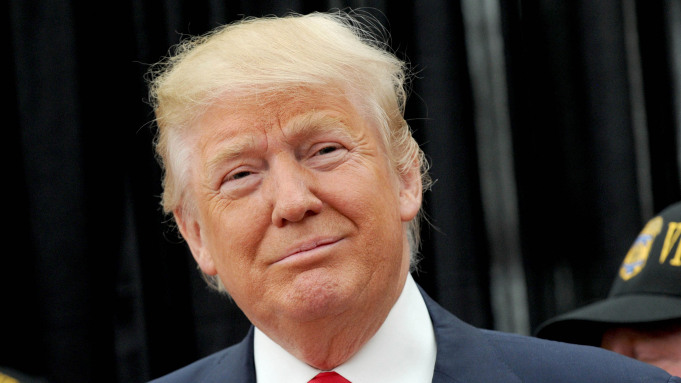
Last week, I evaluated President Trump’s healthcare platform. The problem is, he doesn’t seem to have one. At least, he doesn’t say anything about one on his official campaign website. This is in stark contrast to Joe Biden, who gives many details on his healthcare plan (see my evaluation of it here).
So, to help President Trump out, I decided to write a healthcare plan for him. Let me be clear from the outset that this is not my personal healthcare plan–it is just one of many possible ways to implement the principles outlined in the Healthcare Incentives Framework, and it’s a way I could see Republicans going about it.
One other reminder: The President doesn’t make laws! But the modern reality in this country is that people want to hear a President’s plan for fixing all sorts of problems, so there we have it. He does have the power to set the agenda and influence his party, so this is by no means a useless endeavor.
Ok, now on to his brand new healthcare plan, which I am pretending to write on behalf of his staff, with a little rhetoric mixed in just for fun . . .
The problem with policies designed to increase access is that they usually create market distortions that become barriers to improving value, so his plan starts by addressing how he will improve value, after which he will show how he has crafted a way to increase access that will not undermine his other efforts.
First, he intends to enable patients to act as consumers and make informed choices. This applies to their ability to shop for the best insurance plans and their ability to shop for the best providers.
Take the insurance side first. To facilitate patients shopping for insurance plans, he has a unique approach for each segment of the insurance market.
For Medicaid, which is administered state by state rather than nationally, instead of allowing states to create and administer a single Medicaid plan, he will require them to contract with multiple insurers to each offer a Medicaid plan. This gives Medicaid enrollees more choices, and their insurance is provided by private businesses rather than government beaurocrats. The good news is, more than 2/3 of all Medicaid enrollees are already such plans (known as Medicaid Managed Care), and when these policies are combined with the other policies described in this plan, they will start to generate significant savings.
For Medicare, President Trump will make a similar change. Instead of the government offering a traditional Medicare plan, Medicare will shift over to relying exclusively on private insurers to create Medicare-compliant plans, and Medicare itself will simply pay those private insurers for each enrollee they have. This is called Medicare Advantage, and 34% of Medicare enrollees are already on such plans. But, again, increasing this number to 100%, when combined with the other changes in this plan, will create greater competition and cost savings.
For the private insurance market, President Trump will continue to rely on healthcare.gov as the marketplace for private health insurance plans. Even though this website was poorly rolled out, it has become a well-known source for health insurance, and now it will rise to its full potential because Medicare Advantage and Medicaid Managed Care plans will be rolled into it, meaning every American who does not get insurance through their employer will be able to shop for their health insurance on healthcare.gov. This will simplify the experience of buying health insurance, and it will strengthen Americans’ ability to find the best plan for them.
On the topic of employer-sponsored insurance, President Trump will take a historic first step in decoupling health insurance from employment because someone who loses their job should not lose their health insurance along with it. He will take this step by extending the employer health insurance tax exemption to all people buying health insurance on healthcare.gov. Employers will also have the option to stop paying for health insurance on behalf of their employees and instead give that money directly to their employees in the form of a pay raise, which allows employees the freedom and choice to use that money to shop for an insurance plan that fits their needs better than their employer’s plan.
President Trump will also get rid of Obamacare’s innovation- and competition-destroying medical loss ratio rule, which will become unnecessary after the changes described here fix the broken insurance markets and allow them to start pricing more competitively on their own.
He will also instruct the Centers for Medicare & Medicaid Services to sponsor bundled payment and reference pricing pilots. These are alternative payment models that enable patients to more easily compare apples to apples the prices of their healthcare provider options and then decide for themselves if they think it is worth it to pay more to go to a more expensive provider (which, in healthcare, usually does not mean better quality!). These pilots will help spread these new payment models as (1) insurers discover it saves them (and their enrollees) money and (2) providers discover that they can also make more money by lowering their prices and winning more patients.
These common-sense policies will transform the healthcare insurance market into one of honest competition and innovation.
President Trump will also make changes to improve the healthcare provider market and allow patients to more easily find the best providers.
First, he will build on the progress he has already made with healthcare price transparency by requiring all healthcare facilities to publish their cash prices for the most common shoppable services. The required price reporting will include bundled prices, when applicable. Over time, as more bundled prices become available, patients will have an even easier time shopping for the best deal because they will be able to compare up front, apples to apples, prices between providers for the same bundle of services.
In additon to price data, patients need quality data. President Trump will require healthcare providers to start tracking and reporting quality metrics that are more useful in helping patients be good shoppers. This means there will be a shift in focus away from aggregate quality ratings and toward the specific metrics that patients need to know most when deciding between different providers.
President Trump will make all those price and quality data publicly available so that entrepreneurs can use them to design creative and simple shopping websites, similar to what we see with flight booking websites.
All those changes to the insurance market and the provider market will help people become better consumers of healthcare. And when our nation has consumers shopping for the best value in healthcare, it will stimulate the kind of competition we have never gotten in healthcare–competition over value. In other words, these changes will shift insurers’ and providers’ focus of innovation onto ways to improve value for patients, and as a result quality and price improvement dividends will accumulate long after these policies have been enacted.
Joe Biden’s plan is costly, and it is fiscally irresponsible because it has nothing in it that will make a major dent in the cost of healthcare, which is the biggest contributor to our growing national deficit.
President Trump also wants to ensure everyone has access to affordable health insurance. How can he make affordable insurance to everyone without interfering with the market changes described above?
His solution is to take the guaranteed renewable insurance approach. Here is how it will work:
At the time of implementation, everyone in the country will have the option to purchase health insurance without their pre-existing conditions being considered. Insurers will only be allowed to set premium prices based on the individual’s age and smoking status.
As long as an individual maintains continuous coverage, they will always be able to continue with the same insurance plan or even switch to a different plan without any of their pre-existing conditions being factored into their premium price.
However, if an individual chooses not to maintain continuous insurance coverage, insurers have the freedom to take pre-existing conditions into account and charge them a different price. If the individual is healthy, they could still be offered a price as low as others their same age and smoking status who maintained continuous coverage. But if the individual has pre-existing conditions, they could be charged as much as the maximum premium, which would be the premium a 64-year-old who smokes would be charged.
Once they have again maintained 12 months of continuous coverage, the prices available to them will revert back to the continuous coverage price being offered to others their same age and smoking status.
This will encourage healthy people to make the choice to maintain insurance coverage without any draconian or unconstitutional big-government mandates. Personal accountability will be maintained.
However, for these changes to work, President Trump will have to solve one more problem that Obamacare created.
Currently, people up to 400% of the federal poverty level (FPL) qualify for subsidies to make sure insurance premiums are not financially grievous. What the middle class above 400% of the FPL has found, however, is that their premiums have rapidly become unaffordable.
President Trump will eliminate that 400% FPL limit and instead switch it to a flat limit of 9% of a family’s income, enabling anyone to afford health insurance if they choose to purchase it.
In summary, President Trump’s plan to fix healthcare starts by making changes to the insurance and provider markets to refocus healthcare competition on innovations that improve value for patients, which will lead to billions of dollars saved. And at the same time, his plan will encourage and enable all Americans to purchase health insurance at affordable prices in a way that does not create market distortions that interfere with value-improving innovation.
And he will accomplish these changes all for a much lower cost than Joe Biden’s foolhardy plan to strengthen the unpopular Obamacare policies and force more people onto government insurance.
—————-
Well, Mr. President, there you have it. A ready-made health policy platform, complete with rhetoric, to win over those last few independents and propel you into another four years as President. Let’s just hope you have congress on your side with this plan or it will go nowhere.
I’ve been going through a number of Democrats’ healthcare plans, so it decided it’s President Trump’s turn. As with the others, I will rely exclusively on his official campaign website.
The problem, however, is that President Trump’s campaign website doesn’t give much information like the others. There isn’t an “Issues” section that lays out his plans for all the major policy topics. Instead, he has a “Promises Kept” section, which lists his achievements in each major policy area, including healthcare. This is helpful for seeing what he’s already done, but it doesn’t give any substance on what he plans to do if he wins another term as President. Is this an acknowledgement that he doesn’t have a plan, or does he just want to focus instead on all the things he’s already accomplished? Probably a little of both.
So, in the absence of any declared plan, let’s instead look at some direct quotes from his website. These are what I believe to be the main big-picture points:
The Department of Agriculture provided more than $1 billion in FY2017 to be used to improve access to health care services for 2.5 million people in rural communities.
The Trump administration expanded access to Association Health Plans (AHPs) allowing small business to pool risk across states.
The Trump Administration allows for Short-Term Limited Duration plans to be extended up to 12 months.
As part of the landmark Tax Cuts and Jobs Act President Trump repealed the individual mandate, which forced people to buy expensive insurance and taxed those who couldn’t afford it.
President Trump signed a six-year extension of CHIP to fund healthcare for 9 million.
And then looking at the sidebar on that same webpage, it links to a chronological list of his major healthcare-related achievements. Here, again, are direct quotes of what I believe to be the main big-picture points:
Protected people with preexisting conditions. (2/5/19)
HHS finalized a rule aimed at increasing transparency in the pharmaceutical industry that requires drug companies to disclose the price of medication in direct-to-consumer television advertisements. (5/8/19)
Worked with Congress to stop surprise medical billing. (5/10/19)
Created new insurance options though association health plans, short-term plans, and health reimbursement arrangements: some are up to 60% less expensive. (6/13/19)
President Trump put reforms into place that have expanded Medicare Advantage options and Health Reimbursement Accounts. (6/14/19)
President Trump signed an executive order that increased price and quality transparency in American health care. (6/24/19)
Empowered patients to choose the best doctor at the best price, gave Americans transparency with the price and quality of service before you buy. (6/24/19)
The Trump Administration issued guidance expanding options for individuals with chronic conditions. High deductible plans can now cover products such as insulin, inhalers and statins pre-deductible. (7/18/19)
HHS awarded almost $107 million to 1,273 health centers across the U.S. in order to improve the quality of the centers’ health care services. (8/20/19)
The Administration proposed a rule to require insurance companies and group health plans to provide enrollees with cost estimates. (11/17/19)
Costly Obamacare taxes were repealed, including the “Cadillac tax” and the medical device tax. (12/16/19)
President Trump signed four executive orders to ensure that Americans are receiving the lowest price possible for their prescription drugs. (7/24/20) (Must have been in response to my 6/16/20 post about difficulties finding the lowest cost of prescription drugs!)
President Trump signed an executive order expanding access to telehealth services in order to ensure rural Americans access to healthcare. (8/3/20)
President Trump signed an executive order to lower drug prices by expanding drugs covered by the “most favored nations” pricing scheme to include both Medicare Part B and D. (9/13/20)
President Trump signed an America-First Healthcare executive order, stating the policy of the Federal Government is to protect those with preexisting conditions & ensure access to affordable care. (9/24/20)
I don’t think it’s accurate for me to be too critical of what he has or hasn’t done based on just this information. Take, for example, the executive order to increase price transparency. When you read the details, it represents a legitimate first step toward making prices available to patients. These tiny achievements snippets just don’t give enough detail, nor do they cover all the efforts of his broader administration, such as the CMS-guided shift to value-based purchasing.
But I do think it’s fair for me to say that President Trump has not led the Republicans to making great strides toward fixing any of the three issues usually argued about in healthcare (cost, quality, access). And possibly this is because the Republican party is kind of stuck.
Think about it. Nobody in government has a solid solution to improving cost and quality in healthcare. But Democrats can still at least work toward achieving universal access. Republicans, on the other hand, traditionally don’t prioritize or champion efforts to achieve universal access, so what are they left with? Nothing substantial.
Last week, I posted the salient direct quotes from Joe Biden’s official campaign website talking about how he will try to fix the healthcare system. This week, I’d like to go through the main big-picture parts of his plan and explain their context and rationale. Then, next week, I’ll conclude this short series by making some predictions about how effective his plan will be and recommending some important changes.
First, possibly due to political feasibility, he isn’t pushing for Medicare for All. He wants to keep the Affordable Care Act (the ACA, or “Obamacare”) and fix the parts of it that aren’t working so well.
So let’s take a look at that.
There are many parts to the ACA, but its main thrust was to increase insurance coverage. Here are some 2019 data to show what kind of numbers we’ll be working with in this discussion:
People over age 65 are on Medicare (60,000,000 people), so that’s straightforward.
But for the rest–the under-age-65 people–they fall into one of four insurance groups . . .
Employer-sponsored insurance (160,000,000 people) if they’re lucky enough to work for an employer that provides benefits
Medicaid (70,000,000 people) if they’re poor enough to qualify
Private insurance from the “private market” (10,000,000 people) if they make too much to qualify for Medicaid and don’t have an employer that provides benefits
Uninsured (30,000,000 people) if they don’t get insurance from their employer, they don’t qualify for Medicaid, and they don’t want to fork out the dough for insurance from the private market
Now, how did the ACA work to decrease the number of uninsured people? There were many ways, but here are the two biggest ways:
First, it allowed states to liberalize their eligibility criteria for Medicaid, and it offered federal funds to pay for most of the costs associated with all those new Medicaid enrollees. That accounts for about 12,000,000 of that 70,000,000 number listed above, some of which were previously uninsured, and others of which were previously on private insurance.
Second, it created a tax (also called a “health insurance mandate”) for anyone who didn’t have health insurance. This was to push the uninsured who didn’t qualify for Medicaid to buy insurance. And because everyone was going to be required to buy insurance, they had to make sure it would be affordable for everyone, so they promised to help cover the cost of insurance premiums for anyone under 400% of the poverty level. And to prevent insurance companies from taking advantage of the government’s willingness to help pay for people’s insurance premiums, they made a rule that insurers have to charge everyone the same premium (although that price can be adjusted up or down to a limited extent depending on two factors only: age and smoking status).
So, an easy way to describe the ACA’s second way it was trying to increase insurance coverage is by saying it was attempting to shift uninsured people into that private market. The ACA even created a nice website (healthcare.gov) to make it extra easy for people to shop for insurance plans on the private market by listing them all there side by side in a standardized fashion, and the website went so far as to pull in people’s tax information to calculate their premium subsidy right up front as well.
Unfortunately, most of the uninsured who didn’t newly qualify for Medicaid still didn’t buy insurance, not only because the tax/mandate was initially weak, but because it was subsequently eliminated. But the sick people are still buying insurance in the private market because it’s worth it for them since their premium is the same as everyone else with their same age and smoking status. This has left that private market’s risk pool with horribly high average risk and, therefore, horribly high premiums, especially for anyone who earns more than 400% of the poverty level and therefore doesn’t qualify for any premium subsidies. And that’s why there are still 30,000,000 people who are uninsured.
The natural solution to this would be to restore the mandate and to get rid of the 400% poverty level limit and just decide to subsidize the premiums for anyone whose premium will amount to, say, more than 8.5% of their annual income. This would shift many healthy people back into the private market and bring premiums down a whole lot by lowering the average risk, which would then pull even more people from the uninsured group into the private insurance group.
And that’s exactly what Joe Biden plans to do. Except for the reinstating the mandate part, which would probably not be popular nor even possible. I guess he hopes that if his subsidies are generous enough, he will get more healthy people into the market even without a mandate.
He is making the subsidies extra generous. Not only can anyone qualify now (as long as their premium is going to be more than 8.5% of their annual income), but also the benchmark plan these subsidies are based on are gold level plans rather than silver (meaning out-of-pocket costs, especially deductibles, will be a lot lower). So we will see how many of those 30,000,000 people will be enticed into buying health insurance.
But he’s gone further than that. I think he feels that insurance companies don’t truly competitively price their plans because he’s also going to create a new publicly run insurance company that will offer its own plan (known as a “public option”) in the private market alongside all the other private insurers’ plans on healthcare.gov. If the public option ends up being way cheaper than all the other private insurance companies’ plans, everyone will choose to get on that public option, and it will force private insurers to start pricing their plans more competitively. This should also help to lower prices in the private market, which will price even more uninsured people into the market.
There are lots of other details to his plan (you can read them in last week’s post), but the parts discussed here are what I believe to be the biggest core pieces. Everything else is somewhat peripheral.
I have lots of thoughts about how this plan into fits into/contributes to/detracts from the overall changes that need to be made in our healthcare system, so look forward to those next week.
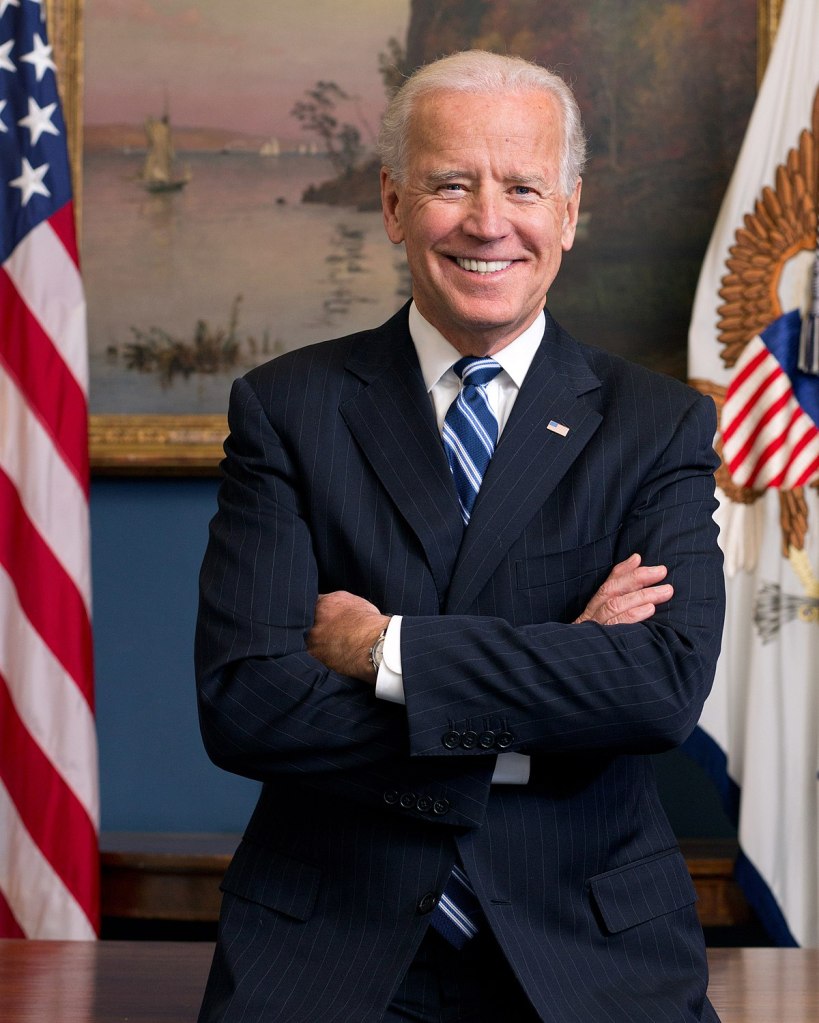
Official portrait of Vice President Joe Biden in his West Wing Office at the White House, Jan. 10, 2013. (Official White House Photo by David Lienemann)
Let’s take a look at Joe Biden’s healthcare plan! This is important because, if the democrats win the senate and hold the house, there’s a reasonable chance his healthcare reform plans will, in some shape, become law. But remember the expected caveat: Even though he can have a big influence on setting the priorities and agenda for his party and congress, and even though there is latitude in how he implements laws, it’s still congress that makes the laws.
As usual, I am relying only on the official campaign website for information. Joe Biden has a number of different pages talking about different healthcare issues, such as coronavirus-related issues, gun violence, and the opioid epidemic. But the main one that reviews his plans for the healthcare system as a whole is here.
And what is his plan? Here are what I believe to be all the relevant quotes, copied directly from his website:
Instead of starting from scratch and getting rid of private insurance, he has a plan to build on the Affordable Care Act by giving Americans more choice, reducing health care costs, and making our health care system less complex to navigate.
He’ll also build on the Affordable Care Act with a plan to insure more than an estimated 97% of Americans.
[Give] Americans a new choice, a public health insurance option like Medicare.
Whether you’re covered through your employer, buying your insurance on your own, or going without coverage altogether, the Biden Plan will give you the choice to purchase a public health insurance option like Medicare.
[Increase] the value of tax credits to lower premiums and extend coverage to more working Americans.
Help middle class families by eliminating the 400% income cap on tax credit eligibility and lowering the limit on the cost of coverage from 9.86% of income to 8.5%.
[Offer] premium-free access to the public option for those 4.9 million individuals who would be eligible for Medicaid but for their state’s inaction, and making sure their public option covers the full scope of Medicaid benefits.
States that have already expanded Medicaid will have the choice of moving the expansion population to the premium-free public option as long as the states continue to pay their current share of the cost of covering those individuals.
Biden will ensure people making below 138% of the federal poverty level get covered. He’ll do this by automatically enrolling these individuals when they interact with certain institutions (such as public schools) or other programs for low-income populations (such as SNAP).
The public option, like Medicare, will negotiate prices with providers, providing a more affordable option for many Americans who today find their health insurance too expensive.
Because the premium tax credits will now be calculated based on the price of a more generous gold plan, families will be able to purchase a plan with a lower deductible and lower out-of-pocket spending.
The Biden Plan will bar health care providers from charging patients out-of-network rates when the patient doesn’t have control over which provider the patient sees (for example, during a hospitalization).
The concentration of market power in the hands of a few corporations is occurring throughout our health care system, and this lack of competition is driving up prices for consumers. The Biden Administration will aggressively use its existing antitrust authority to address this problem.
Lower costs and improve health outcomes by partnering with the health care workforce. The Biden Administration will partner with health care workers and accelerate the testing and deployment of innovative solutions that improve quality of care and increase wages for low-wage health care workers, like home care workers.
The Biden Plan will repeal the existing law explicitly barring Medicare from negotiating lower prices with drug corporations.
For these cases where new specialty drugs without competition are being launched, under the Biden Plan the Secretary of Health and Human Services will establish an independent review board to assess their value. The board will recommend a reasonable price, based on the average price in other countries (a process called external reference pricing) or, if the drug is entering the U.S. market first, based on an evaluation by the independent board members. This reasonable price will be the rate Medicare and the public option will pay. In addition, the Biden Plan will allow private plans participating in the individual marketplace to access a similar rate.
As a condition of participation in the Medicare program and public option, all brand, biotech, and abusively priced generic drugs will be prohibited from increasing their prices more than the general inflation rate. The Biden Plan will also impose a tax penalty on drug manufacturers that increase the costs of their brand, biotech, or abusively priced generic over the general inflation rate.
[Allow] consumers to buy prescription drugs from other countries.
The Biden Plan supports numerous proposals to accelerate the development of safe generics, such as Senator Patrick Leahy’s proposal to make sure generic manufacturers have access to a sample.
Vice President Biden supports repealing the Hyde Amendment because health care is a right that should not be dependent on one’s zip code or income. And, the public option will cover contraception and a woman’s constitutional right to choose.
Stop the rash of state laws that so blatantly violate the constitutional right to an abortion, such as so-called TRAP laws, parental notification requirements, mandatory waiting periods, and ultrasound requirements.
Biden will reissue guidance specifying that states cannot refuse Medicaid funding for Planned Parenthood and other providers that refer for abortions or provide related information and reverse the Trump Administration’s rule preventing Planned Parenthood and certain other family planning programs from obtaining Title X funds.
California came up with a strategy that halved the state’s maternal death rate. As president, Biden will take this strategy nationwide.
[Double] America’s investment in community health centers.
Well, I think those quotes already make this week’s post plenty long. Let’s have a week to digest all that, and next Tuesday I’ll provide some commentary on how those proposals do or don’t address the core causes of the issues in our healthcare system.
Bundled payments are a proven strategy in non-healthcare industries, only we call them by different names. We say we’re paying for a “hotel room” when really we’re paying for the use of the room, the cleaning of the room, the “free” wifi, the “free” continental breakfast, access to the concierge, etc. We say we’re paying for a “cruise” when really we’re paying for the cabin, the unlimited food, the port fees, the access to the shows, use of the onboard pools, etc. These terms (“hotel room” and “cruise” are just two examples) are shorthand terms that refer to the bundle of goods and services you get when you pay that single price. That’s how it works in every industry.
Except healthcare. When we get a bill for a knee replacement, it only contains the surgeon’s cost (okay okay, including the hardware). But there’s also a bill for the anesthesiologist. And for the operating room. And for the hospitalization if you need to stay.
Why would all those things be listed individually if you know you will need a surgeon, an anesthesiologist, and an operating room every single time you get a knee replacement?
Enter bundled payments. They finally turn healthcare a little bit more into a normal industry by allowing patients to pay a single price for the bundle of services that should always be included in that one upfront price.
Sidenote: yes, healthcare is and should always be different from other industries in many important ways. For more details on that, read Arrow’s seminal article on the topic. None of this is incompatible with those insights.
When I see a paper like that, I appreciate the effort to summarize the evidence, but I cringe thinking about all the headlines and misinterpretations and misconceptions that it will perpetuate. People are going to start saying that our large-scale efforts to implement bundled payments are a waste of money . . . and they have evidence to back them up!
But that’s totally the wrong conclusion. This is how I interpret this study: I first think about the overall purpose of bundled payments. When you put their role into the context of the Healthcare Incentives Framework, their purpose is to allow patients to know up front the full price for accomplishing the job they have (get their knee functional again). This enables the patient to compare the price of different options. If they also have quality information of those options, now patients have the ability to shop for the best value (Value = Quality / Price). And when patients start choosing which provider to do their knee replacement based on value, market share starts to shift to the higher-value providers, thus forcing the lower-value providers to change in ways that either raise their quality, lower their price, or (hopefully) both! This is the potential benefit of bundled payments–it is an essential component in stimulating a newfound evolution toward higher quality and lower prices in the market for that specific service.
Compare that to how these studies evaluated the utility of bundled payments: They implemented them for a single procedure and usually with just one of many insurers a provider contracts with. Thus, in most cases the providers were still reimbursed the old fashioned way by all their other insurers. And I would guess that very few competitors in any given region were participating in the same bundled payment program. Therefore, there was no way providers were going to completely shift how they deliver the service because of the narrow scope, a lack of uniform incentives, and a lack of any strong financial imperative to do so (their biggest risk was only of losing a percentage of revenue on small portion of their patients–enough to motivate them to try to do some things a little differently but not to completely redesign how they deliver care–and the risk of losing market share to their competitors due to low value was almost nil). In short, these studies did not get even close to creating the environment for an evolution toward higher value.
With this as context, it’s a surprise to me that any of these bundled payment studies found any benefit at all!
Now, if I could perform my dream study (the design details here and here), that would make a splash. It would get us much closer to the true estimation of how impactful bundled payments could be in healthcare. And until a study like that is done, remember the importance of context, and take any evidence on the impacts of bundled payments with a large grain of salt.
Next week I’ll start looking at Joe Biden’s healthcare plans, so look forward to that!





 Clear Thinking on Healthcare