The Theory of Money, Part 5

Photo by Pixabay on Pexels.com

As promised at the end of Part 4, I’ll talk about how much money is needed to store all of a society’s wealth. But, before that, I’d like to clarify a couple things so that my explanation makes sense.

First, I described this before, but let it sink in again: The simplest way to quantify the true value of something is in Wealth Units (WUs).

Therefore, when I am quantifying the true value of accumulated wealth a society has, I will tell it in terms of WUs. I could instead quantify it in terms of gold coins, but remember what I said in Part 2–quantifying the value of something in its money price adds a conversion factor (the WU:money exchange rate), which can muddy the waters when that exchange rate changes.

Second, wealth can be stored in many ways, but I’ll divide them into two broad exhaustive and mutually exclusive categories (my favourite): cash assets (money) and non-cash assets (physical assets like a house, investments, etc.). So someone’s total wealth they possess is their cash assets plus their non-cash assets (and, to calculate their net worth, you’d have to subtract any debts they have).

Great. Now let’s answer the question of how much gold Avaria needs to be able to store all its cash wealth.

Let’s say Avaria had one goldmine and that it collapsed, so there is no access to new gold. In other words, the total amount of the gold in the society has become fixed (and apparently no one loses any gold either).

Everyone is working very diligently for a year and, in accordance with the local religion’s new teachings on self-sufficiency, they all start trying to save some extra cash wealth for a rainy day (in the form of gold coins, of course, since that’s the only form of money Avaria has so far).

As the total number of WUs attempted to be saved in the form of cash increases, what happens to this fixed supply of gold coins?

It should be pretty obvious. The demand for gold coins increases, so each gold coin comes to be worth more WUs. That can keep happening indefinitely, which brings me to the main point of this post: Any amount of money in a society is enough to store any amount of cash wealth.

Why? Because as the demand for money increases, the WU:money exchange rate will simply adjust to meet the market’s needs.

Interestingly, this provides a way to calculate the wealth price of a gold coin. It can be determined by the following ratio . . .

aggregate-number-of-WUs-attempting-to-be-saved-as-cash:aggregate-number-of-gold-coins

This will be useful information when I talk in Part 6 about what might happen if someone figures out how to counterfeit gold coins, which will offer our first troubling insight into a modern money issue.

This series may seem like it’s not progressing fast enough, but I hope you can trust that each part is adding to the foundation of knowledge needed to understand the upcoming material, and by the end you will be empowered with an incredible depth of knowledge about exactly what’s wrong with modern monetary systems and what an optimal monetary system would look like. Then you’ll need to go out into the world (and on social media) and convey this knowledge so that more people can support policies that shift the world to more sound monetary policies!

The Theory of Money, Part 4

Photo by Pixabay on Pexels.com

In Part 3, I talked about the options of what someone can do with their excess wealth that they have stored in the form of money: spend it, save it, or invest it. And that there are two types of investments: lending or ownership (which can be anywhere on the spectrum from active to passive forms of ownership).

If society is continually getting new wealth introduced by wealth-gleaners, does that mean society is always getting wealthier and wealthier?

No. Wealth is always being introduced into society, but it’s also always being lost from society. When someone spends their wealth on something that depreciates/gets consumed, that wealth is slowly being lost from society.

For example, when the farmer eats some of the food he has grown (maybe his family consumes 1 Wealth Unit worth of food every meal), that wealth has been lost from society.

Or, when the blacksmith paints his house black, that paint is slowly getting worn off, and the house will need to be repainted in several years. If he paid a total of 20 Wealth Units (WUs) to paint his house—5 WUs for the paint, and 15 WUs for the painter—how much was lost? The painter has 15 WUs in payment, so that was a simple transfer of wealth, not a consumption of it. And the paint got consumed, but maybe 1 WU’s worth of the paint’s price was profit for the paint maker, so that too was a simple transfer of wealth. Assuming the paint maker didn’t have to buy supplies from someone else, then we could consider the rest of the cost of the paint as being consumed–4 WUs total.

This goes to show that when someone chooses to spend their wealth, some of it is lost from society if it is being spent on a good that will depreciate or be consumed.

But what if they are spending their wealth on a service? For example, what if the blacksmith is sore from swinging a hammer all day, so he pays someone to give him a massage? No WUs are directly lost from society as a result of this transaction. Instead, there is simply a redistribution of WUs from one person to another. Sure, there is an opportunity cost because the masseuse’s time could be employed elsewhere in a way that directly helps glean wealth from the land or something, but it’s also possible that a regular massage helps the blacksmith work more effectively, thus lowering the cost of the goods he produces, which means those massages are actually indirectly increasing the wealth of society by lowering the cost of maintaining their current standard of living.

So that’s the discussion on how spending impacts society’s wealth. What about the other two options of what someone can do with their wealth?

When someone chooses to save their wealth, it’s simply preserved (assuming the WU:money exchange rate stays constant) until the owner of the wealth eventually chooses to spend it or invest it. And, in the meantime, it’s providing a great service as an emergency fund to prevent the owner from having to go without food or default on a loan if there’s a sudden drop in income or a sudden expensive emergency.

And when someone chooses to invest their wealth, the impact on the total wealth of society depends on what type of company the investment is in. Let’s explore that one further.

Some companies are inventing things that improve the quality of life but for a higher price. They create products and services that are yet one more thing that people can now consume their wealth on, so their overall impact on society’s wealth is probably negative, although it comes with the benefit of an increased quality of life. For example, the blacksmith invests wealth into a company developing a new kind of paint—glittery black paint—which costs 10 WUs instead of 5 WUs. Even if 3 of those 10 WUs are profit for the paint maker, it’s still 7 WUs getting consumed on paint for the blacksmith’s house instead of only 4 WUs.

Other companies are inventing things that lower the cost of living. They create products and services that make maintaining the current quality of life cheaper. For example, the blacksmith invests wealth into a company developing a new kind of paint that takes the same effort to produce but it lasts twice as long. So now the blacksmith only needs to repaint his house every 10 years instead of every 5 years, so less wealth is being consumed to maintain his standard of living.

Here’s another example of an innovation that can decrease the cost of maintaining the same standard of living: The blacksmith and farmer work together to invent a new kind of plough that is more efficient, so it decreases the time it takes the farmer to glean wealth from the land.

Of course, most companies are a mix of both types–they’re providing some products that increase the quality of life and some that decrease the cost to maintain the same quality of life. And the holy grail is when a company invents something that both increases the quality of life and is cheaper than the current option.

So, overall, investments can lead to wealth-increasing or wealth-decreasing effects on society depending on the types of goods and services the companies are providing.

One thing I haven’t already mentioned is the impact of war and natural disasters on the total amount of wealth a society has. These things cause a society to lose a lot of wealth. For example, if there is a flood that destroys the farmer’s crops, a ton of future wealth has been lost from the society in the space of a few hours or days. Or, if the society starts having to spend a bunch of WUs on guns and ammo instead of on living essentials, it’s similar to black glitter paint; additional wealth will be lost from society as those things get consumed. The idea that war is a great way to boost an economy in a way that improves the wealth of a society is false.

So now we’ve considered the main factors that lead to an increase or decrease in the total amount of stored wealth a society has.

And let me remind you of the big picture to help you see why these principles are important when analyzing the theory of money.

When I write about the theory of money, what I’m really writing about is the effects money has on the amount and distribution of wealth in a society. And the single most important factor that shapes, for good and ill, the amount and distribution of wealth in a society is its monetary system.

So, if a society wants to fulfill its purpose of promoting the wellbeing of its members, having a good monetary system is a major part of that, especially early on when wealth is more scarce.

Maybe one day, our world will have wealth in such abundance that bad monetary systems will have a small enough detrimental impact even on the poor and also the people those systems are exploiting the most that having a bad monetary system won’t be such a big deal. But I suspect that, with increasing wealth in societies, the potential damage a bad monetary system can do increases commensurately. So having a healthy monetary system is always important, especially (1) for the sake of the people being hurt right now by bad monetary systems and (2) to prevent the greater bad that can occur when wealth increases further. Either way, that will help us get to a world of abundance sooner.

In Part 5, I’ll talk about how much money is needed to meet the wealth storage demand in a society.

The Theory of Money, Part 3

Image credit: dmagazine.com

Links to Part 1 and Part 2.

Ok, so I’ve talked already about the purpose of money and then delved more into wealth and where it originates from and how it is distributed, and I also introduced Wealth Units (WUs) as a standard unit of wealth and showed how WUs can be used to quantify the wealth price of things.

In this post, we’ll continue on with our early Avarian society to discuss what people can do with stored wealth.

As a brief review, remember that Avaria transitioned from the barter system to using precious metals (specifically, gold pieces) as money. And remember that money fulfills two purposes in an economy: (1) common medium of exchange and (2) storage of wealth.

Let’s say that Avaria has progressed to using standardized stamped sizes of gold pieces, so they have graduated to using gold coins. This has made exchanges with money even easier because there are standardized coin sizes, so quantifying the amount of gold someone is using for payment doesn’t require a super precise scale anymore.

Now let’s check in with Avaria’s blacksmith. He’s been selling a lot of items and has accumulated a lot of gold coins that he doesn’t need to use in the near future. What can he do with that excess wealth? He has three options.

Option 1: Spend it. He can finally splurge on painting his house black like he’s always wanted. By the way, spending his wealth like this means he doesn’t have it anymore, but that doesn’t mean that all of it just disappears out of society. Instead, it’s being transferred to the paint supplier and the painter in compensation for them providing those goods and services, respectively. We’ll dig into the details of when wealth is lost from society later on.

Option 2: Save it. In other words, keep those coins hidden under his loose floorboard. Or maybe he can build himself a vault to securely store it. If he chooses this, it’s not like that wealth is lost from society; it’s just not actively being circulated in society. This isn’t a bad thing because it’s serving a very specific purpose of acting as an emergency fund for him just in case an emergency happens, such as an injury that prevents him from working for a time. When people in a society save enough to be able to continue paying for themselves to live and even continue making payments on any debts they have, this provides stability to the economy of a society, so it should be seen as a very positive thing. We’ll see in future posts how destructive to a society’s wealth widespread loan defaults can be, and then it will become clear how important to a society’s economy it is for people to have an emergency fund.

Option 3: Invest it. My definition of the term “invest” is that you give up something now with the expectation of getting it back, plus more, later.

I didn’t specifically list giving away his excess wealth as an option, and that’s because I would lump that in with Option 1 and say that he’s spending his excess wealth on good feelings for himself.

Also, I see Option 2 as a kind of limbo. The money is just waiting there until the owner eventually either spends or invests it.

Anyway, about Option 3, there are actually two different kinds of investments he can make: (a) He could simply loan his money to someone and charge them interest, or (b) he could purchase something that will earn money for him.

The loan option is straightforward. The farmer wants to buy a new plough, so the blacksmith loans the farmer 10 gold coins to buy a plough, and then the farmer pays him back the 10 gold coins plus 1 more (for interest) after the harvest. Hopefully the plough enabled the farmer to be so much more efficient that he earned enough to pay the blacksmith back the principal plus interest. The modern equivalent to this is investing in bonds.

The “purchase something that will earn money for him” option is more flexible, and it comes down to him putting his money into some kind of business venture. Maybe he has a passion for town news and wants to start a town newspaper with the Avaria town printer who owns a printing press. Or maybe he wants to own 30% of a new mail-carrying venture that his neighbor is starting. These investments could be relatively active (with him contributing his own labor, like doing all that work with his printer friend to found a newspaper) or relatively passive (like buying 30% of his neighbor’s mail carrying venture, where the only thing he’s contributing is money and he is promised a share of the profit commensurate with the percent of the business that he owns). Investments can range anywhere along this active vs. passive spectrum, and usually the more active the investment the more risk and potential reward involved. The modern equivalent to the active investment type is starting your own business, and the modern equivalent to the passive investment type is buying stocks.

The optimal way for someone to manage their money that they don’t need to immediately spend on living expenses is to save up an adequate emergency fund first (generally 3-6 months’ worth), and then to invest enough to stay on track for being able to retire at their preferred retirement age and have enough to live on through that retirement period, and then to do whatever they want with the rest (either spend it or invest it so they can retire early if they want).

So, as Avaria becomes wealthier, more people have more excess wealth stored up in cash (gold coins), and then they can choose among those three options what to do with it. Note that choosing to save the money (as opposed to spending or investing it) is the only option that doesn’t immediately put that stored wealth back into circulation to be used and reused in society, and I’ve already explained how that too is a good thing.

I’ll stop there for this post. In Part 4, I’ll talk more about how wealth gets lost from society, which is the other major factor in determining the rate of overall wealth increase in a society.

The Theory of Money, Part 2

Photo by Adams Arslan on Pexels.com

In Part 1, I talked about the origin and purpose of money and also how new wealth is introduced into a society. This week, I want to talk more about how wealth transfers from one person to another.

As I explained before, new wealth is always being generated using the land + labor combo (i.e., the natural resources from the earth combined with human labor produces new wealth). We could call the people doing this work the wealth-from-the-earth-gleaners (or maybe wealth-gleaners for short).

Wealth-gleaners are the original owners of all wealth in society, and then they distribute that wealth to others in exchange for the goods and services they want. In this way, the wealth of a society is both generated and distributed.

I don’t want you to assume that just because someone is the original generator/owner of wealth that it means they will automatically be wealthier than all others. Think about a farmer working a particularly infertile plot of land. He may be only generating just enough wealth (in the form of crops) to have a roof over his head and clothes on his back and food on his table, with nothing to spare. This is what Adam Smith called a “subsistence wage”–when you’re earning just enough wealth to continue subsisting. This farmer’s wealth, as limited as it is, will still be distributed to others in society when he buys things he needs from them, such as clothes or a re-thatched roof. So you see that he is a source of wealth in society but also that doesn’t make him richer than non-wealth-gleaners.

An interesting effect of wealth-gleaners being the original generators of new wealth in societies is that a society’s growth of total wealth is limited by how much these wealth-gleaners are generating and introducing into a society. (This assumes no trade with outside societies–that will be added in later.) So, if you want the total wealth of a society to grow quickly, you want a ton of wealth-gleaners. Or, if that’s not what the society’s economy needs, then you at least want the wealth-gleaners your economy to, on average, be generating a lot of wealth. If they’re doing that, they will be generating way more than just bare subsistence wealth for themselves, so in this case they would be rich!

Ok, now that I have talked so much about the generation of wealth, the time has come to introduce an idea that I will use regularly throughout the rest of this series. I’ve invented a way to quantify a standard unit of wealth.

*Trumpets sound*

I hereby define a new standard unit of wealth. It will cleverly be known as a Wealth Unit (WU), calculated from the average amount of wealth that can be obtained by one hour’s worth of unskilled, low-risk, average-physical-intensity work.

Let me explain that a little bit. One WU could mean an hour’s worth of a farmhand picking fruit from the orchards, or it could be the blacksmith’s assistant carrying wood for the forge and pumping the bellows, or any other labor of that ilk. If the work is especially onerous and/or dangerous and/or if it requires training and expertise, then one hour of work could generate more than 1 WU. And if it’s super easy work, it could generate less than 1 WU/hour. This should all be obvious–when I work as a physician, I make more money per hour than when I worked at Costco as a teen checking receipts. And whether a laborer is paid per hour or per project or per year (i.e., a salary), it can all be converted to an hourly wage.

One important use of this idea of a Wealth Unit is that it can quantify the cost of production of anything. If a blacksmith’s time is worth 4 WUs per hour (he is very skilled), and it takes him 1 hour to make a cook pot, the cost of labor that went into that cook pot is 4 WUs. And if the cost of the metal plus the depreciation of his shop plus cost of wood for the forge plus cost of his assistant’s time etc. all totaled to be 2 WUs, then he will break even (i.e., his time will be adequately compensated) if he exchanges the cook pot for something else worth 6 WUs. If he sells it for 7 WUs because this pot turns out especially beautiful and round, then, after subtracting the costs of 2 WUs, he has earned 4 WUs for his time and also earned a profit (as the business owner) of 1 WU. Now you see the difference between being a worker (getting paid a fair number of Wealth Units for each hour you work) versus being a business owner (getting the profit that the business makes).

The beautiful thing about WUs is that their value remains fairly constant over time because they are defined by something that doesn’t change rapidly. And that enables us us to think about the price of things in much more fixed terms. The utility of this will become obvious over the next several posts, but, for now, just know that when I am referring to the value of something in terms of Wealth Units, I will call it the “wealth price.”

Analyzing the change in the wealth price of something yields great insight into what’s happening in the market. For example, what if the wealth price of cook pots goes down over time? It means that there has been a decrease in the total amount of materials costs and/or labor required to produce one. (This assumes quality and profit stay about the same.) For example, maybe the wealth price of metal has gone down because a new innovation allows it to be procured more efficiently. That will translate into a lower cost of producing cook pots and, thus, a lower wealth price.

Did you know that, when we quantify the price of something in terms of money–which I will call the money price–instead of Wealth Units, an additional confounding element is added? It’s true. Let me explain.

Let’s say that in Avaria they have been using gold pieces as money. They’ve been doing that for generations, and it’s been working out really well for them. But then suddenly the prominent local religion determines that worshiping calf statues made of bronze instead of gold is the proper way to honor the gods. The demand for gold has suddenly gone down, which means the value of gold has gone down as well. So maybe a single standard-sized gold piece used to be worth 1 WU, but now it’s only worth about 0.78 WUs. Therefore, the money price of that blacksmith’s cook pot has changed! He had a price tag on it that said “7 gold pieces”, but he crossed out the 7 and wrote a 9 instead. The customers might all complain, saying he’s gouging them! But really what’s going on is that the exchange rate from WUs to gold pieces has changed. The wealth price of the cook pot is still 7 WUs, but now he needs to get paid 9 gold pieces to recoup the wealth he invested in making it (because 9 gold pieces x 0.78 WUs/gold piece = 7.0 WUs).

People don’t understand this because, sadly, the wealth price is never written on price tags. Only the money price is written. So, when a money price changes, you can never tell if it is the result of a change in the wealth price or, as is the case from the above example, if it’s the result of the WU:money exchange rate changing.

In short, the additional confounding element included in every money price is the WU:money exchange rate. When that exchange rate changes, the money price changes along with it.

If this seems very theoretical to the point of not having real-world applications, go ahead and consider how the prices of things on the value menu of a fast food restaurant have changed from 2020 to 2025. Did the wealth price of buns and pickles and beef and teenage laborers change? Sure, during the COVID-19 pandemic, those things did temporarily change because of supply chain issues, decreasing supply and increasing prices. But even after supply chains went back to normal, prices remained much higher. It’s not because fast food restaurants are “price gouging” us and just getting away with higher prices because they think we got used to them. Nope, competition in the fast food market would dispel any of those attempts fairly quickly. The prices are higher because the WU:money exchange rate changed quite a lot. We call that inflation, and I’ll get to discussing exactly what that is (and exactly what causes it) later on. Part 3 here.

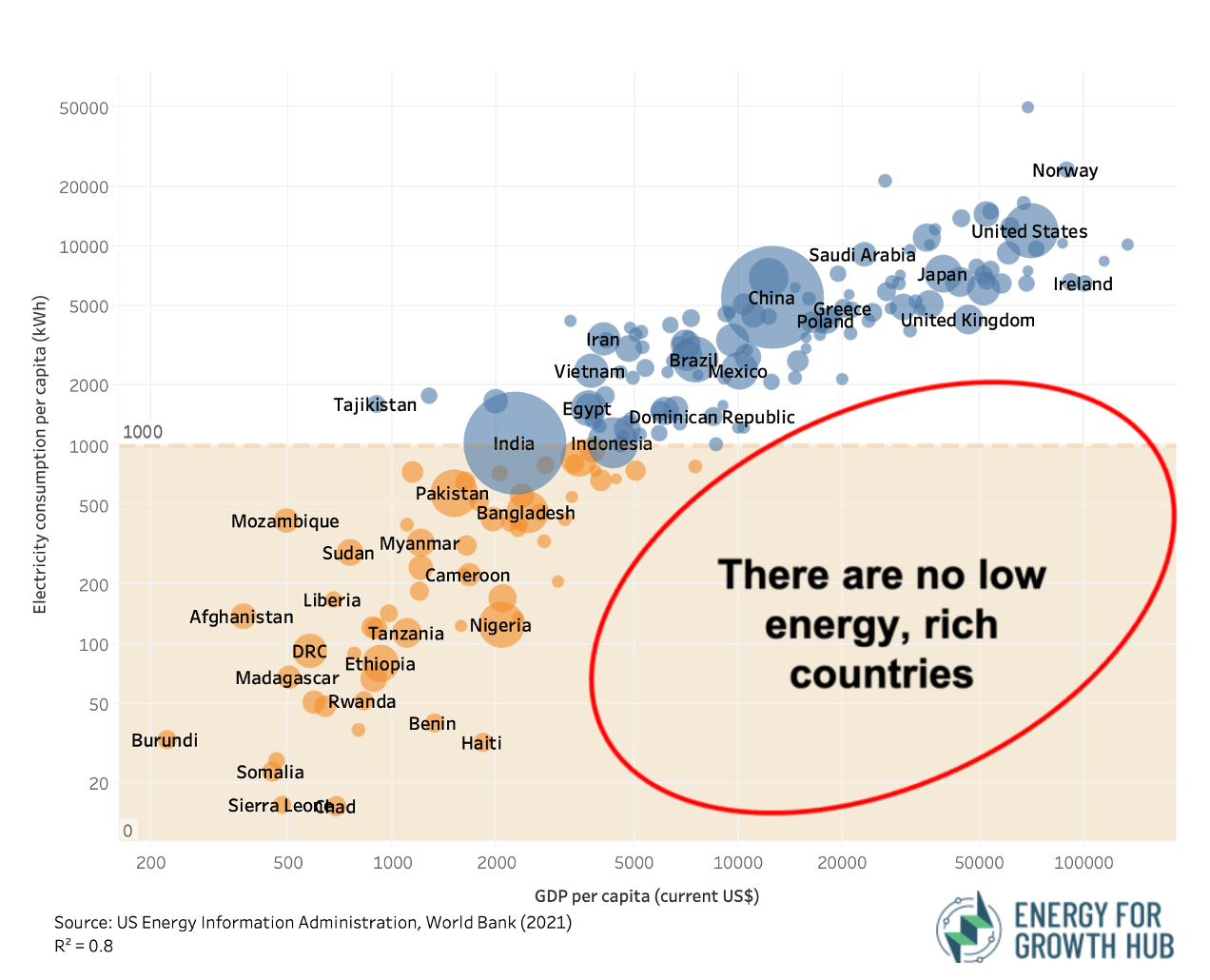
Addition 6/9/25: There’s a lot of talk about the connection between economic output and energy consumption, and I think this is a good place to explain that. When a worker is laboring, they are essentially taking their physical and cognitive energy and converting it to wealth. This could be through wealth gleaning, such as by picking fruit, or it could be by doing other things that are valuable to members of society, which leads to the worker receiving some already-gleaned wealth in exchange for that labor. Either way, the amount of wealth that can be generated by a worker is pretty limited when they are limited to just using their innate physical and cognitive effort. But when machines are invented to help with that labor, now we have access to other forms of energy inputs to generate wealth. For example, let’s say a loom is invented. This still relies exclusively on human inputs, but it at least makes that human input more effective, thus allowing the human to generate more than one Wealth Unit per hour. Now what if we made that loom solar powered? It’s taking an additional form of energy and contributing that energy to generating wealth. Looking at this from an aggregate perspective, when we can harness all sorts of non-human forms of energy (animal labor, solar, wind, hydro, fossil fuels, nuclear, etc.), we can generate a lot more wealth per hour of human effort. Therefore, an economy will be able to generate a ton of wealth per person (measured as the economy’s GDP per capita) if it’s consuming more non-human energy. And this is why the charts that compare countries’ energy utilization per capita with GDP per capita show such a strong positive correlation. The upshot of all this is that we need to have enough cheap energy to power all the machines we want to use. And having ready access to reliable and cheap energy will make businesses be much more willing to invest in machines to facilitate generating more goods and services.

The Theory of Money, Part 1

Photo by Pixabay on Pexels.com

I have many interests. The ones I write about on this blog are generally related to government in one way or another. Usually that takes the form of healthcare policy.

One of the other government-related topics I am really interested in, but haven’t yet written about, is money. And since I’ve been thinking about it and trying to better consolidate my knowledge on the topic lately, I will write a series of posts about money.

My explanation of the theory of money will be organized into a sort of evolution of money, starting in a pre-money society and progressing all the way to the end of where I believe money can evolve. Along the way, I will be analyzing the incentives that naturally lead to the next evolution of money and also the impact that each evolution has on government and the wealth of society.

You will come to see that this serves as an explanation of why our monetary systems are where they are in most modern economies, and that that place is not a healthy place to be.

I hope this series can serve several purposes. My biggest purpose is to help regular citizens understand how their governments completely screw them over with monetary policy, which can increase public pressure against those policies. I suspect many politicians also don’t understand the issues I will describe in this series, so another purpose of this series is to give politicians the foundational understanding they need to craft and support better monetary policy.

And as an extension of those purposes, I hope this series can serve as (1) a cautionary tale for any country that hasn’t already found itself in the quagmire at the end of the evolutionary road I will describe and (2) a motivator and roadmap to help any country already in that quagmire back themselves out of it.

But why is any of this important? Let’s think big-picture and philosophical for a moment.

Money is important because the wealth of societies is important, and, of all the inventions in the world (save, maybe, the invention of governments), money is probably the invention that has the single biggest impact on a society’s wealth. That impact can be for enormous good, and, as I will demonstrate, it can be for enormous bad as well. Bad monetary systems can completely destroy the overall wealth of a society, and they can also provoke major shifts in the distribution of that wealth through exploitation.

The overall amount of and distribution of wealth of a society is not the only important goal of a society. Ultimately, a society exists to promote the wellbeing of its members. But, especially early on when the wealth of a society is more scarce, the biggest barrier to achieving greater wellbeing for individuals in a society is the amount of wealth the society has and the distribution of that wealth. That’s why a running theme of everything I explain in this series is how these monetary system changes impact the overall amount and distribution of wealth of a society.

So, let’s get started!

I should first give this fictitious society a completely randomly chosen name: Avaria.

Way back in the early days of Avaria, there was no money yet. Everyone obtained the things they need the same way any money-less society would enact trade–through barter. For example, if the wheat farmer needed a cook pot, he could go to the blacksmith and say, “I’ll give you one bushel of wheat for that cook pot.” Once they agree on how many bushels of wheat the cook pot is worth, the trade occurs.

Some economists and historians would interrupt me here to make an important point: There is a lack of historical evidence for such barter-based societies. They’re probably right. Realistically, as soon as trade becomes common enough in a society, different forms of money probably immediately start to develop, so there is never a pure high-trade barter-based society. But describing the evolution of money in this step-wise way is more helpful in this series, so I’ll disregard those historical points and continue . . .

Simple barter has two main problems.

The first problem arises when the wheat farmer wants something from someone who doesn’t his wheat in return. Maybe the wheat farmer needs his work boots resoled, but the local cobbler has Celiac disease (i.e., an allergy to the gliaden protein contained in wheat and some other grains). How is the wheat farmer going to pay the cobbler if the cobbler doesn’t want wheat? I’m describing a lack of “coincidence of wants.” A barter system is completely dependent coincidence of wants. Sure, you can get creative and find a third party who could help facilitate the trade, but it rapidly gets to be very complex and inconvenient.

The second problem with the barter system relates to the storage/preservation of wealth. Let’s say the wheat farmer has a really great wheat crop one year, so his wheat stores are full, ready to be used either for consumption or for trade to get other things that he needs. But, tragically, bugs get into those wheat stores and completely ruin them. So he was storing his excess wealth in the form of wheat, but it went bad and was lost.

If only there were something that could solve these problems . . .

Enter money. Most societies historically landed on using precious metals for money, so that’s what I’ll use to describe this transition.

The value of precious metals is intrinsic and fairly easy to ascertain. Precious metals are also divisible into convenient-sized units, aren’t overly bulky, and don’t spoil. These characteristics made them easy to use to facilitate trade. So, the farmer could sell his wheat for pieces of precious metals, and then he could give those pieces to the cobbler when he needed his boots resoled.

Additionally, if he is able to sell all his wheat rather than have to store it and risk spoilage, he will do that now that there is a means of storing his wealth in something else (precious metals) that will never spoil.

So money solves the two problems that the barter system has. That’s the entire point of money, to (1) act as a “common medium of exchange” and (2) to be used as a store of wealth. Many writers about money forget that second point.

In a later post, I will enumerate the characteristics that make something a good candidate to be used as money. You will see that precious metals do a pretty good job, which is why many (most?) early civilizations eventually landed on precious metals as the preferred thing to use as money.

So this is where the evolution of money starts. We will see how it evolves from there to the pieces of paper and electronic account numbers we use today, and where it will go after that (yes, your questions about the likely future role of cryptocurrencies will also be answered!).

One more question before I end Part 1: If one of money’s purposes is to store wealth, where does that wealth come from anyway?

I’ve already said that the farmer generated his wealth from a combination of two things: the land plus his labor. This land (or sun) + labor combo is the origin of all wealth.

Early humans had no wealth until they started combining their labor with the natural resources from the land, and then they were able to transfer that wealth to others through exchange.

This topic of wealth is something that will come up over and over because, fundamentally, any discussion about money is really a discussion about wealth and how we acquire it, trade it, store it, invest it, and even lose it. There’s a reason Adam Smith titled his book, The Wealth of Nations.

These days, relatively few people are employed in direct wealth-gleaning-from-the-earth occupations, but this is still the true origin of all wealth that is had on this earth. Therefore, any money anyone has today is actually stored wealth that was originally gleaned from the earth (or directly from the sun in some cases)! Part 2 here.

One Reason Insurance Companies Still Reimburse Procedures That Are Considered “Waste”

Photo by Leonid Danilov on Pexels.com

Have you ever read about the waste in our healthcare system and wondered why insurers cover so many apparently wasteful services in the first place? You’d think they could just refuse to cover those things and save themselves and the entire system a lot of money.

In Wendy K. Mariner’s Rationing Health Care and the Need for Credible Scarcity: Why Americans Can’t Say No, published in Health Law and Ethics in 1995, she discusses this issue. Even though the article is from 1995, I think her insights still apply.

“When the media report that a woman is dying of advanced breast cancer and her insurer will not pay for high dose chemotherapy and autologous bone marrow transplantation because it considers the procedure experimental or unsuitable for her, the insurer is widely viewed as depriving the woman of a chance at life to which she is entitled. Insurers may argue that the insurance policy expressly excludes such procedures and that the woman agreed to its limits. Such arguments, even when correct, do little to assuage feelings that the insurer is depriving people of care to which they should be entitled. This feeling is exacerbated by the suspicion that the insurer could pay for the treatment if it chose, that it has enough money to buy services that are readily available. Thus, what looks to the insurer as sensible budgeting may appear to the patient as unnecessary and unfair rationing.”

If the insurer chooses to refuse coverage, it saves the cost of that service, but it risks losing a whole lot of its good reputation and future enrollees if the woman goes to the media with her story. I’m sure she could find a journalist willing to jump on that story and write it in a way that convincingly makes the insurer seem like the villain.

So, insurers are rationally covering things that could be considered wasteful. This is just one more example of how parties in the healthcare system respond so rationally to incentives. Which means if we can fix the incentives, we can fix the behaviours in the healthcare system.

Using Philosophy to Form Opinions

Image credit: foodnetwork.com

I’m still going through old half-written posts and deciding which ones are worth completing before I move on to my new project. The thoughts in this one are things I haven’t really shared on here, so here you go.

As a disclaimer, I am not a philosopher. But I do try to be thoughtful, and I’ve done a fair amount of reading about politics and policy and philosophy over the last couple decades, and this is how I currently see philosophy fitting into my interests.

I see philosophy as the deeper thinking about what’s important and what’s good or bad. Without having a personal philosophical understanding of these things, I have no way of evaluating government or society for myself. I will be subject to others’ opinions about those things, allowing them to decide for me. Or maybe I will form my own opinions, but I will have nothing to base it on other than what superficially or intuitively seems best.

So that’s the overview. But getting a little more specific, I believe there are different layers of knowledge we need if we are to have well-founded opinions about governmental and societal issues.

The deepest layer is moral philosophy. This is what helps you define what your overall goals are for human life and society. The absolute Truths you believe in and their priority relative to each other. What is justice? What is liberty? How do you obtain fulfillment? Your answers to these questions shape your core values, which guide your opinions on everything.

I used to think moral philosophy wasn’t very interesting, but when I started to analyze how I was forming my own opinions, I realized moral philosophy is the pre-requisite that informs every other aspect of opinion making, and it has since become very interesting to me.

The next layer up is political philosophy, which I think of as an attempt to figure out an idealized organization of society and government that achieves my core values. It’s the theory of government and society.

So when you are deciding where you would place your ideal government on each of the 5 spectra that I use to categorize governments, you are using your knowledge of political philosophy to do that.

And then the next layer up is policy, which is the attempt to implement those ideal structures. I notice a lot of writers about healthcare skip straight to this level without first stopping to analyze or at least clarify the moral and political philosophy they are applying.

And then the top layer is politics, which comprises the efforts to turn those policies into law and implement them. I know the political process is where the rubber meets the road, but I am content to focus on the three deeper layers and then help advise politicians on them so they can focus on the messy work of getting things enacted in the real world.

In summary, we form our core beliefs through moral philosophy, which then guides our political philosophy efforts to define a preferred ideal structure of government and society, which leads to supporting specific policies, which are then run through the gauntlet of politics to finally be implemented in the real world.

I write primarily for myself–to help synthesize my ideas. But I also write with a desire to be persuasive. I want all countries to implement better policies so their healthcare systems can deliver better value. And I believe the only way to do that is to have a solid foundation at the deeper philosophical levels. They are what inform every opinion I share about specific policies. This is probably why I write so much about what could be considered “theory,” maybe sometimes to my detriment in our data-driven world. And the fact is, we need both. The theory and the data. Optimally, the theories are informed by and tested against the data. I need to write more about that data since I’ve read it but not stored it in an easily accessible and easy-to-cite way, which is why I’ll soon be spending a lot more time doing that.

Bungled Payments

Image credit: Joshua Jenkins

I write regularly about the need for patients to be able to make “value-sensitive decisions.” It means they make decisions about where they receive care (and also which insurance plans they choose) while considering both price and quality. One important step to helping patients do this is enabling them to know beforehand what the total price of the care episode will be.

That’s where bundled payments comes in. Their most important function is to give patients an apples-to-apples comparison of the total price of the care episode because they set a single price that includes all the things that might be needed in the care episode.

But when you start trying to turn bundled payments into pay for performance programs, that’s when they should be called bungled payments.

Which brings me to Medicare’s bundled payment models. There was a great article in JAMA recently by Joynt Maddox, Shashikumar, and Ryan, entitled Medicare’s Payment Models–Progress and Pitfalls.

Here’s an issue they wrote about regarding benchmarks: “Continuing to base benchmarks on historical costs will lead to a feedback loop disadvantaging participants with low spending. Those who reduce spending will have lower historical spending in future years and will receive lower benchmarks. They may find it more difficult to meet progressively lower benchmarks and will thus eventually pay penalties, despite being efficient.”

This sounds like what I wrote a few weeks ago: “Sure, this incentive has gotten us better quality for more money, and yeah eventually we’ll probably have higher quality overall, but it’s going to be at the cost of a lot of consternation of providers as we repeatedly take away their quality bonuses when we raise standards. Overall, this quality bonuses idea is just a frustrating and generally ineffective way to improve value.”

They suggest defining an “efficiency floor” that exempts anyone who meets that threshold from penalties. That’s reasonable for sure, but I suggest getting rid of the bonuses/penalties thing altogether.

Another thing they wrote in the article: “Second, the current benchmark method permits payout of large reward, offsetting any savings that the models achieve for CMS. . . . While the BPCI-A, OCM, and CJR payment models are associated with reductions in clinical spending, the bonuses these programs have paid have far exceeded the spending reductions they have incented.”

This sounds, again, like what I wrote a few weeks ago in the same blog post: “If our goal is to improve value, what we’ve just done is taken the higher-value providers and increased their price, which means their value has dropped back down to everyone else’s.”

They suggest creating a “stop-gain” provision to limit potentially excessive bonus payouts. That’s reasonable for sure, but I suggest getting rid of the bonuses/penalties thing altogether.

But wait! If we get rid of these administratively determined price adjustments (bonuses and penalties), how do we reward providers who deliver higher value?

We need, instead, to do a few things all at the same time. First, providers need the freedom to offer lower prices. Second, prospective patients need to be able to easily find those prices (and, preferably, patient-relevant quality information as well!). Third, patient’s insurance plans need to be designed such that patients end up paying less out of pocket when they choose a lower-priced provider.

If that could all happen, more people would start choosing the providers who offer better value. And what does that mean? It means the better-value providers would get more patients and more profit! And the lower-value providers would get less profit. So what we have is the same general outcome of rewarding the better providers and penalizing the worse ones, but instead of trying to do it administratively with all sorts of inefficiencies and distortions (all while not enabling more people to receive higher-value care), we have instead brought to bear on this challenge the dispersed preference information from the market. It will very effectively reward the ones who are truly worthy of being rewarded, penalize the ones who have lower value, AND more patients will get higher-value care immediately, which I would argue is our overall goal with these programs in the first place (you know, “value-based care“).

What Is “Competition” Anyway?

You know the word “travesty”? People who want to sound smart sometimes use it instead of tragedy, as if it’s the smart person’s version of tragedy. But it’s not. They use the word even though they don’t know what it actually means.

People do the same thing with “competition.” Many think it’s either the solution to everything or the cause of all evil . . . even though they don’t seem to know clearly what it means.

It turns out, I can’t fault them. This is a longstanding issue. Maybe I’m just ignorant of some classic economics textbook that has the grand master definition in it (you’d think they would have covered it in the econ classes I took), but man is it hard to find a definition of this word! I was especially hoping to find one from at least one of the classic economic thinkers. This is the best I could come up with . . .

Adam Smith didn’t use the word very much. Here’s the main example of how he thought of it, taken from The Wealth of Nations, Book IV: “The competition of producers who, in order to undersell one another, have recourse to new divisions of labour, and new improvements of art, which might never otherwise have been thought of.” So, in his mind, competition was simply improving manufacturing processes to undersell competitors?

And Joseph Schumpeter, who even still has a type of competition named after him (“Schumpeterian competition”), didn’t offer up a definition that I could find either. The closest thing is what he wrote in Capitalism, Socialism, and Democracy: “But in capitalist reality as distinguished from its textbook picture, it is not that kind of competition which counts but the competition from the new commodity, the new technology, the new source of supply, the new type of organization (the largest-scale unit of control for instance)—competition which commands a decisive cost or quality advantage and which strikes not at the margins of the profits and the outputs of the existing firms but at their foundations and their very lives.” He’s taking the term as a given and focusing on a specific type of it–the type related to how new innovations impact competition.

Even Michael Porter, in his book Redefining Healthcare, never provides a definition. He says things like this though: “The way to transform health care is to realign competition with value for patients. Value in health care is the health outcome per dollar of cost expended. If all system participants have to compete on value, value will improve dramatically.” He felt the need to define value, but never competition, and, like the others, took the term as a given.

And I’m completely skipping over all the definitions of “perfect competition,” which describes everything around a special case of competition without actually defining it either.

How about Wikipedia? It at least offered a definition! In the article Competition (economics), it says, “Competition is a scenario where different economic firms are in contention to obtain goods that are limited by varying the elements of the marketing mix: price, product, promotion and place.”

Competition is a scenario? And the main focus is that firms are trying to obtain goods? This one sounds really smart, but I disagree with it. I also believe it doesn’t facilitate a clear understanding of the concept.

So it’s time I offer up my own definition. Maybe I’ll change it over time as I learn more. But for now, this is what I’ve got:

Competition is a state in a market where there are multiple companies trying to win more profit by convincing potential customers to choose their product or service because it will meet their needs in a higher-quality and/or lower-priced (i.e., higher-value) way than other companies’ offerings.

I’ll unpack that.

First, it’s a state of being. Markets can exist in a state of competition or not. Really, it’s a continuum from no competition at one end to perfect competition at the other end. But the bare minimum needed for it to exist is for there to be multiple companies fighting for limited profits, which are the prize. If this is a non-profit environment, then we’ll call profits “surpluses.” Same idea. And to win those profits, they need to convince potential customers to choose them over their competitors. There’s always a mix of strategies–high-profit low-quantity vs. low-profit high-quantity–but the end goal with all of them is to win the most profit. I recognize that more and more companies are “mission driven” rather than “profit driven.” That’s great and all–I guess they’re willing to give up some profit to achieve their mission. But the stark reality is that they need to earn enough money to continue achieving their mission, which means they still have a strong profit motive if they want to sustain and grow.

I’m deliberately not defining which companies count as being in a market because it depends on the needs of people. For example, Ford’s new F-150 Lightning (an electric vehicle that can even use its battery to power your house) technically is filling the same need as people shopping for an emergency back-up generator, which means for that customer segment Ford is competing with generator companies. Competition often spans the traditional boundaries of markets.

And I said “convince” potential customers because people make a purchase decision based on the information they have. It’s not enough to be objectively better in every respect. It only matters if you convince people who are looking for a solution to fill their need. Long-term, yeah, you generally need to actually be higher-value to keep customers, at least if there’s enough information available to potential customers to make the market somewhat transparent.

So there you go. An actual attempt at a definition of competition. And, thinking about it now, isn’t it a wonderfully desirous state to strive for? I hope this definition is useful in helping you think about what you are meaning when you use the word.

Quotes from Pharmacists about Pharmacy Benefit Managers

Photo by Ingo Joseph on Pexels.com

There are a few more papers on pharmacy benefit managers (PBMs) that I want to read at some point so I can complete this area of study (for now). But today I want to share a few quotes about PBMs that anonymous pharmacists wrote when I was having some of my pharmacist friends ask their other pharmacist friends:

“Just let him know every pharmacy has an AWFUL relationship with PBMs.”

Multiple pharmacists used the same word, “theft,” when describing PBMs.

“All I can say is I don’t know directly how PBMs make their money other than charging companies high prices and negotiating pharmacies to make very little in comparison.”

“I don’t remember the exact details as far as $$ amounts but this example is true. We had a Tricare patient come into our pharmacy upset after looking over his health statement from his insurance company and seeing if we really charged his insurance $200 for a product.  We looked over everything on our end and learned the product cost was $20 and our profit was $7, so the total collected was $27.  This means that the PBM chose to charge the government $200 and kept $173. Again the $$ may be a little skewed but I recall the  dollar amount the PBM paid itself was significant. Adding more middle men doesn’t decrease costs it increases them.”

“Seriously, and they are not transparent! They don’t give the pharmacy access to those numbers, they don’t give us access to the contracted costs. When contracted costs change, we aren’t notified. Then there’s DIR fees to add into the mix. They try to put gag orders on pharmacies, threatening to throw them out of network if they communicate about any of it. They just want us to sit down, shut up, and take whatever they give us. And they don’t even tell us what they’re giving to us! There’s no negotiating.”

Clearly there are some pretty adversarial relationships between pharmacies and PBMs! But remember that this doesn’t reflect all pharmacists’ opinions on the topic, so don’t use it to adjust your prior too much, but my sampling of friends (and friends’ friends) had pretty uniform negative responses about PBMs. This may be a reflection of pharmacists who run independent pharmacies feeling powerless against PBMs because they have almost no bargaining power when they are up against these juggernaut PBMs. This is how bargaining power works–the bigger guy on one side of the table can command the lion’s share of the profit when negotiating with the little guy sitting across from him.