The Theory of Money, Part 32

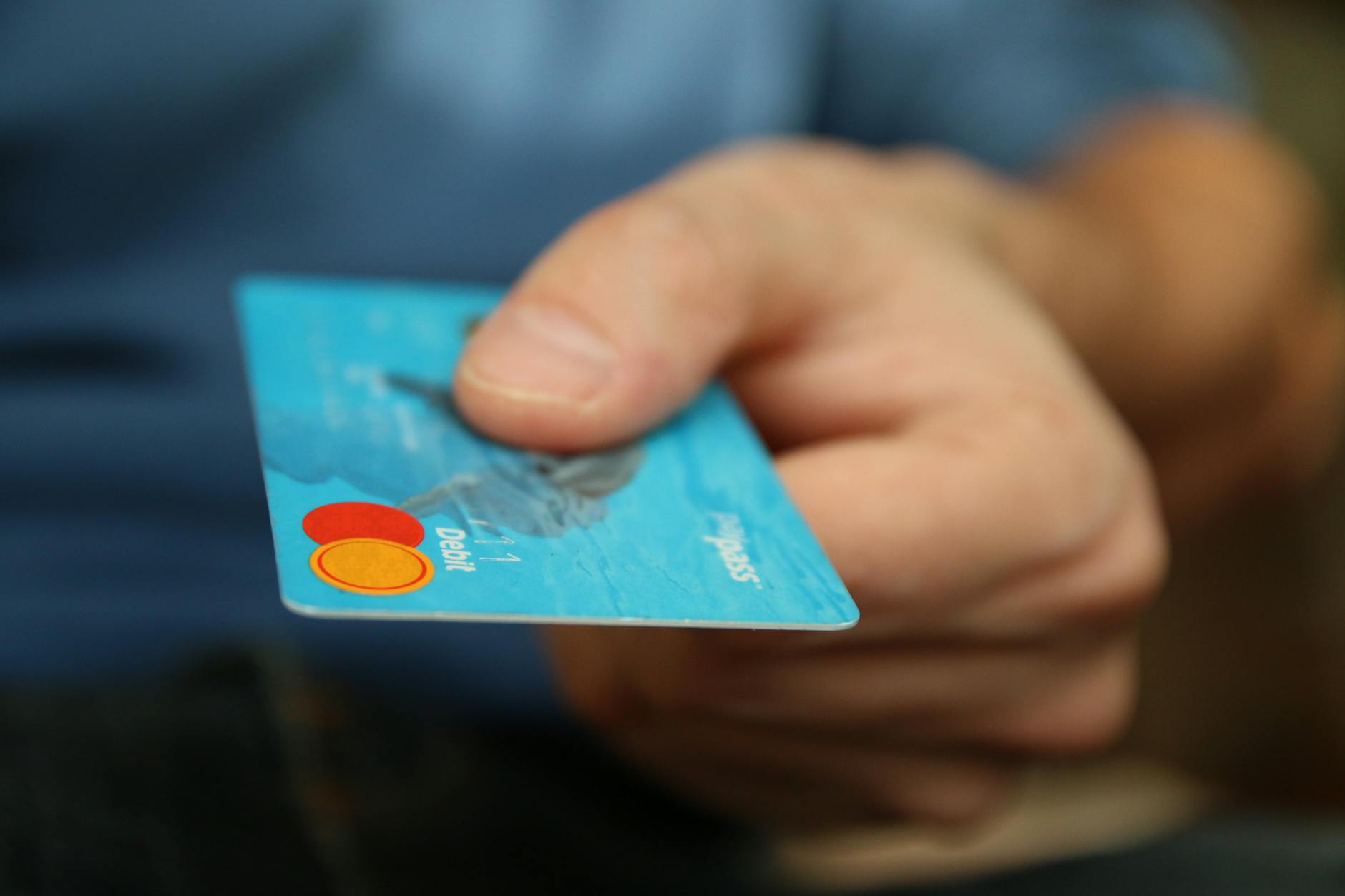
Photo by Simon Berger on Pexels.com

In Part 31, I used a couple examples to explain how the true number of Wealth Units in the world did not increase when President liberated all the gold from its reserve status and then sold it off. I also explained how the Avarians won’t bear the cost of him taking those gold coins from them until (or, if ever) they decide to get back to commodity money/100%-backed receipt money. I will soon show why that may be a worthwhile effort, but first there are some other changes to process now that gold isn’t in the picture anymore.

First, do we still need this two-layer pyramided structure of reserves, where the reserve credits at First Bank act as the reserves for some lending and the First Bank Notes stored in commercial banks’ vaults act as the reserves for even more lending?

That seems unnecessarily confusing. (Although, it is banking we’re talking about here.)

Really, it doesn’t matter either way whether reserve credits and First Bank Note reserves are all combined into one reserve pool. If President wants to do away with reserve credits altogether, he simply has to zero out each bank’s reserve credits by figuring out how many First Bank Notes to print and send to each bank and then set the new unified reserve ratio.

So, from then on, to calculate what their reserve ratio is at the end of each day, banks would simply compare the total value of all customers’ deposits to the total value of money in their vault. And if they’re low, they would still look to other banks for an overnight interbank loan. And if no banks have enough excess reserves to lend, then they would go to the “lender of last resort” (First Bank) and borrow some reserves from the “discount window.” This could all work automatically and instantly if everything is electronic and there is a centralized system where all the banks send their information each night. The charging of interest for borrowing reserves could also be automatic, and a physical transfer of money would rarely (if ever) be needed.

Strange that banks originally got their reserve credits by sending tons of gold to First Bank, and eventually they get those reserve credits back in the form of stacks of paper. But they don’t mind–they are still making lots of money off of loans, so the gold no longer matters to the commercial banks.

Don’t forget, though, that if a commercial bank ever makes some really bad investments or loans and loses a ton of money, they are still at risk of a currency drain and subsequent bank run. The modern version of this, however, would not involve lines at teller windows. Instead, it would probably involve a viral news story about how a bank is going under, which would then lead all of the bank’s customers to log into their accounts and transfer their money elsewhere. This would drive a bank into bankruptcy within minutes or hours because there would be no way for the bank to pay the interest on the reserves it would have to borrow. That is, of course, assuming the government doesn’t choose to intervene, which we’ll talk about in a future post.

A mass withdrawal like this could happen, but it’s exceedingly unlikely, so bankers feel like they have entered a new era of banking system security.

Part 33 here.

The Theory of Money, Part 31

Image credit: fran_kie

In Part 30, we finally arrived at a fully unbacked fiat currency. Wasn’t that exciting? Let’s process some of the impacts of that major change.

First, let’s talk about a strange phenomenon that you may not have noticed in Part 30.

We’ve talked many times about how Wealth Units don’t come out of thin air, not matter how sophisticated the accounting trick or monetary manipulation. But did you notice that there was a seemingly free lunch (i.e., extra Wealth Units from thin air) when President was able to spend all of that gold without any repercussions on the monetary system?

Let’s see if I can clarify that quandary with an example.

Say a society is using exclusively receipt money (bank notes), and they’re 100% backed by gold coins being stored in the society’s single bank. Nobody ever exchanges a bank note for a gold coin. They only use bank notes for every transaction. If they have an aggregate of 40,000 bank notes, there are 40,000 gold coins sitting there in that bank’s vault. And, for simplicity, let’s say that the Wealth Unit:gold coin exchange rate is 1:1, so there are 40,000 WUs worth of gold sitting in that one vault. And because nobody ever actually exchanges a bank note for a gold coin, the banker never even opens his vault.

And then something terrible happens. In the middle of the night, a burglar digs a tunnel under the bank, drills into the bottom of the vault, and empties out all 40,000 gold coins, which he takes to a foreign country, melts down, and sells for 40,000 WUs worth of the local currency.

Meanwhile, society continues on as usual. They have no idea that all their gold is gone. Overnight, they went from using 100% backed receipt money to using 0% backed receipt money, but nothing has changed, and they continue transacting as they always have with bank notes.

Has the perceived number of Wealth Units temporarily doubled? Yes. The people still have all their 40,000 WUs worth of cash in the form of bank notes, and the burglar now has 40,000 WUs worth of gold coins (or the foreign currency he exchanged it for).

Then a missionary comes along and converts the entire society to a new religion that believes that using paper is a sin, so they decide they will all shift to using exclusively gold coins again. They hold a big ceremony in the middle of the town. Each person counts out the total number of bank notes they own and the banker makes a note of it, and then they all throw their bank notes into a big bonfire and go together to distribute the gold coins from the vault according to the records the banker kept during the ceremony.

To their horror, they find the vault empty, with a big hole in the bottom that makes it clear that they were burgled. Suddenly, their perceived cash wealth is now 0 WUs, so the total number of Wealth Units arising from those gold coins is back down to 40,000–the burglar has all of them, and the people have none of them. (Fortunately, the people in this society have plenty of non-cash wealth, so it’s not like they are instantly poverty stricken.)

And so the people are faced with a choice. Do they print all new bank notes (out of synthetic paper this time) and go back to how they were, using intrinsically worthless bank notes to conduct their business? Or do they want to get back to using an intrinsically valuable commodity as their money?

For them to be willing to choose to start using gold or some other intrinsically valuable commodity again, it would cost them a lot because the moment they decide not to use unbacked bank notes anymore, they lose all their cash wealth. For them to be willing to do this, the benefits of shifting back to using commodity money again would really have to be significant! And on the other hand, continuing to use unbacked money would require everyone to re-enter their illusion of those worthless pieces of paper each storing 1 WU, in which case the paper money will continue to work just fine as a means of storing and exchanging wealth.

Basically what we have with any 0% backed fiat currency is this illusion going on. People believe they have actual wealth in their currency, but it’s not true. Someone else has that wealth (assuming the gold that originally backed the currency has already been sold out from under them). But, as long as the illusion holds, their worthless money continues to do just fine facilitating trade.

Here’s another (somewhat off-the-wall) example of this: Let’s say a guy named Friendly Frank goes on vacation and leaves his car at home in his garage. And the very day that he leaves, some guy named Stealy Steve goes to Friendly Frank’s garage and steals his car. Friendly Frank now has the false belief that he has a car, and Stealy Steve has the correct belief that he has that same car. One car, two people believing they own it. Did the number of cars get doubled? Of course not–additional wealth doesn’t come from nothing. In reality, there is one car. But, in the minds of the humans, there are two cars because one person is under the illusion of still having that car. And that imaginary existence of two cars only collapses back down to the reality of one car when Friendly Frank gets home from his vacation and discovers that he doesn’t have a car anymore.

In that example, unfortunately Friendly Frank can’t continue to pretend he has a car. He can’t draw a picture of the car he used to have and use that as a “receipt car” to drive to and from work.

Money, on the other hand, is different. As long as everyone maintains the illusion, money can still carry out its two purposes of (1) acting as a common medium of exchange and (2) acting as a store of wealth.

So, no. No new Wealth Units were magically created when President broke First Bank Notes from their gold backing and then started selling off the gold. It’s just that the Avarians have the illusion of still having that wealth.

But there’s no harm in continuing to live this shared money illusion is there? Yes there is. There is great harm, which I will show starting in future parts. The question is, is the harm great enough that it is worth the cost of getting us back to commodity money? About that, I’m honestly not sure. Part 32 here.

The Theory of Money, Part 30

Photo by Asif Methar on Pexels.com

In Part 29, we saw Avaria start allowing non-intrinsically valuable assets to be used as reserves, which kicked off a second phase of inflation.

Now let’s see how that change triggers the next evolution of Avaria’s money.

First, as context for what happens next, let’s take a look at how people thought of Avaria’s money prior to that new round of inflation. By this point, First Bank Notes (usually the electronic form) have been used for so long and have been proven to be so reliable compared to other countries’ currencies that they have become an international commodity in their own right. Sure, First Bank Notes have been subject to some inflation over the years, but it has been pretty low and stable since centralizing the currency (at least prior to this new phase of inflation). Thus, even international trade no longer requires the use of specie directly if First Bank Notes are being used.

Now let’s talk through the events that will occur in response to this new round of inflation that was kicked off by President finally allowing First Bank Notes to be used as reserves. I’ve explained the process already in this series, so I won’t rehash it in depth, but here’s the brief sequence of events:

  1. Newly printed money flooding the economy gives the illusion of wealth because prices haven’t yet adjusted to the new WU:money exchange rate.
  2. People believe they’re rich and start spending like it. And banks start investing in riskier ventures as they seek for more people to whom they can give loans.
  3. Prices slowly adjust upward as merchants discover that they’re getting less wealth per First Bank Note than before.
  4. As prices rise, people realize they shouldn’t have been spending like they’re rich because, it turns out, even without the additional spending, they actually have less wealth than they did before (since their cash wealth has become worth less from the inflation).
  5. Many businesses–especially the new risky ventures that were predicated upon people continuing to spend like they’re rich (remember Posh Muffler)–go bankrupt or downsize. Unemployment soars. In this uncertain environment, people start spending even less money because they worry that they, too, will soon need to have some money saved for a rainy day. Some banks go bankrupt when their default rate gets too high and they suffer the inevitable currency drain and subsequent bank run. The inevitable post-boom bust has hit, and the entire economy is struggling.

The severity of the bust depends on how much inflation was caused by President’s new policy. If the bust is severe enough, it could result in a full-blown societal default. Even if it doesn’t, these conditions could endanger the entire banking system, as you will see . . .

As a result of all of this government- and bank-induced inflation and economic turmoil, people start to recognize how valuable gold is compared to their First Bank Notes, which supposedly represent gold coins. They start to hoard any gold coins they come across, and they even start to go to First Bank and request gold coins in exchange for their First Bank Notes.

That’s when the situation finally becomes an imminent threat to the entire banking system–the banking system, remember, that is benefiting the government and banks so handsomely. President needs to take some serious and immediate actions to preserve those benefits and the economy as a whole.

First, he makes it illegal for Avarian citizens to own gold, with a few exceptions related to jewelry. But certainly all of the gold coins need to be brought back to the First Bank vaults, and he spins this move (honestly) as a means of preserving the banking system and the economy. He also spreads the propaganda that hoarding gold to oneself is selfish and that, for the good of the nation, everyone should comply. This helps create a stigma of selfishness/being anti-Avarian to owning gold and adds an aspect of cultural enforcement to this new law.

Second, he artificially sets the price of gold in Avaria to be way lower than the market-based price. The rationale for this price-setting maneuver is that he needs to buy back the gold that the Avarians own, so he’s setting the price low for himself, which will minimize how many extra First Bank Notes he will have to print to pay for all of it. So he can justify this to himself as a good thing–he’s trying to limit inflation! An additional benefit of the artificially low price of gold is that, for the gold coins themselves, the value will be similar enough to one First Bank Note that he can get away with exchanging them 1:1.

Over the next few months, President succeeds at seizing nearly all the gold in Avaria. Once that has been completed, he keeps the gold ownership restriction in force (to prevent people from taking his gold reserves again) but removes the artificially low price of gold, once again allowing it to float along with the world market price for gold, and the price of gold immediately doubles.

And then a change is quietly made to the new First Bank Notes being printed: They no longer say they are redeemable for gold at First Bank. This was foreshadowed at the end of Part 27.

And there you have it. Avaria has just transitioned to a true “fiat currency,” which means it has no official link to any specie. Instead of being 16% backed by specie, it is 0% backed. Sure, the government still has all that gold in the First Bank vaults, but that gold is no longer acting as reserves for the monetary system. The government now has full control over the value of the currency without any further inconvenient restrictions or risks imposed by its gold backing and the archaic issue of ensuring adequate reserves of gold. It can change the value of its currency at will by adjusting the total amount of First Bank Notes in circulation, which it does through setting reserve ratios, the discount rate, and by deciding how much money it will print.

Along with this transition, First Bank has now become a true “central bank,” which I define as a bank that has been granted a monopoly over printing true fiat money.

With time, the economic depression eventually resolves as prices adjust to be accurate to the new Wealth Unit:money exchange rate and as people recover from the wealth they lost through inflation, job loss, etc. And the banking system has come out intact. President pats himself on the back for that one with his quick thinking and decisive action, which has led to him coming out of this with what he feels is an even more secure banking system now that gold is no longer holding it back and inducing risk of collapse.

And now, when President stops by his First Bank vaults and looks in at the piles of gold in there, which represents his entire country’s supply of gold, he rightfully recognizes that it is just “sitting there doing nothing” (we’ve heard that a couple times before, haven’t we?). In this case, it’s actually true though; that gold isn’t even acting as reserves. It’s truly just sitting there.

This thought lies dormant in President’s mind until, sooner or later, some financial challenge occurs. Maybe the weather will cause another bad crop. Or maybe there another war starts. Let’s say it’s another war. And now President is forced to come up with a lot more money to be able to pay for it. Not only does he have to pay his soldiers, but also he has to pay other countries for some of his war supplies.

Initially, he tries raising taxes, but that hurts his approval ratings, which are already hurting from his conscription policies. So he tries borrowing money to pay for the war, proclaiming it an act of patriotism to lend the government your money by buying a government bond to support the war. But he knows this is only going to require him to increase taxes even more in the future because he will have to pay the money back plus interest. And, anyway, even with the advertising, there aren’t enough government bond buyers to buy all the bonds he needs to sell. So, he decides he probably needs to resort to using First Bank–his central bank–to print more First Bank Notes.

The first problem is that, predictably, printing more money will cause more inflation. And the people have only recently recovered from a terrible boom and bust that was induced by inflation. So if anyone finds out that the government is the one causing this inflation by simply having its central bank print more money without any strings attached, it could lead to a rebellion against his fiat currency, which would put his whole banking system at risk (again).

Always clever, President comes up with two solutions to his war financing challenges.

First, he decides that he can use some ingenious accounting tricks to get away with printing more money in a way that doesn’t incite rebellion against First Bank Notes. These accounting tricks will not stop the money printing from causing inflation, but they will at least obscure the cause of the inflation. And for the people who do figure out where the inflation is coming from, these accounting tricks will convince them that there are sufficient restrictions in place to prevent the government from taking too much advantage of this fiat currency power.

Here’s what President does. He will continue to issue bonds any time his tax revenues fall short of his government expenses, and those bonds will be up for sale in the open bond market like always. And if private individuals buy them, then he’s got the money he needs. But, invariably, when the demand for those bonds is too low and he would have to pay an unacceptably high interest rate on them to induce more buyers, he will simply keep the bond interest rate low and have First Bank buy them with newly printed money.

For example, if President needs 10,000 more First Bank Notes, he will put 10 new bonds on the market, each with a value of 1,000 First Bank Notes. And since he’s tired of paying so much of his annual revenue in bond interest, he sets the interest rate (coupon rate) nice and low at 3%. At that low rate, he only gets 2 buyers from the private market. They are lending their own money, which already exists, so there’s no inflationary effect from this transaction. But the other 8 bonds go unsold, so First Bank prints 8,000 new First Bank Notes and uses them to buy the other 8 bonds. This transaction was definitely inflationary because new money was created and then added to the aggregate supply, but it’s hard for people to understand why that transaction is inflationary without a thorough explanation. Why? Because, on the surface, it just seems like the government is simply borrowing money from First Bank.

And for the people who do understand that First Bank is buying those bonds with newly printed money (and how that still induces inflation), their concerns are alleviated by the fact that the government will have to pay off those bonds, which would involve using future tax revenue to get 8,000 First Bank Notes and then giving those to First Bank when the bonds come due. And First Bank would then be required to shred those 8,000 First Bank Notes to reverse the inflationary effect of printing them in the first place.

What a PR-savvy accounting trick, right? And it’s through this trick that the Avarian government successfully quells any public outcry that may have arisen from shifting its monetary system to a true fiat currency.

After that, government debt starts to increase, and inflation increases along with it since most of the debt is owed to First Bank. And President is fine with this because First Bank is always happy to buy a new bond to replace any maturing bonds, which means the debt will never come due before the government has the ability and desire to pay it off. In fact, the government can delay paying off its debt to First Bank for forever, and the only cost of that will be that it will continue to have to pay interest to First Bank.

In the case like this of the government owning the central bank, paying debt interest to the central bank does not impact government finances at all because that interest the government is paying goes straight to the central bank’s profits. And since the profits of an organization go to the owner of that organization, all of the central bank’s profit immediately gets sent back to the government. It’s like taking a loan out from yourself and then paying yourself the interest on that loan; it’s all accounting gimmicks that result in a wash from the standpoint of your overall financial situation. The only difference here is that this loan-and-interest-payment scheme allows the government to get away with having its central bank print more money whenever it wants and potentially never paying that debt off again.

But in a case where the central bank is privately owned by bankers, all of that interest doesn’t go straight back to the government. Instead, it goes straight into the bankers’ coffers. Thus, if bankers can find a way to get a government to allow them to privately own the nation’s central bank, that will become a permanent source of ever-flowing riches on the order that only few others can achieve in this world.

(Incidentally, the Federal Reserve, which is the central bank in the United States, is privately owned. So when the U.S. is racking up government debt, even the portion of the debt owned by the Federal Reserve is costing us a bundle and enriching the owners of the Federal Reserve, which are regional banks.)

That completes my explanation of President’s first solution to financing this war. As clever as it was, the problem with it is that it will cause inflation. . . . Which brings us to President’s second solution to financing this war.

Remember all that gold just sitting in the First Bank vaults? President decides to spend some of it! All that gold was liberated from its role as reserves for the financial system, so spending it will have no direct impact on Avaria’s monetary system. It’s like the government received an enormous inheritance when it broke First Bank Notes from its gold backing and also forced everyone to sell their gold to the government for below-market prices. This gold would be especially perfect for using to pay all of the government’s international suppliers for various war supplies, all without inducing any inflation. Realistically, President probably won’t spend it all on this war. But, over the years, many uses for this gold will arise, and it will slowly drain from his ultra-secure and ultra-secret First Bank vaults. He will have to maintain the security at all of his First Bank vaults even if they are storing less gold so nobody will notice what’s happening.

(Yes, I suspect this is what has happened in America as well, which is probably why no full physical audit has been performed on the gold in Fort Knox since . . . we don’t know when, although the last partial physical audit was apparently performed in 1953. And even Presidents of the United States have not been able to initiate a full and transparent audit since then.)

Does it really matter if people know the gold has been spent? Technically, that knowledge would have no direct effect on the monetary system. But it would definitely have an indirect impact on the monetary system by altering how much people trust the monetary system, especially because they believe their money is still somehow backed by all those tons of gold hidden in those secretive high-security vaults. Learning that the gold has been spent would also turn many people against the government because they believe the gold is rightfully theirs as owners of First Bank Notes. That would not be a good PR day for President if everyone finds out he sold that gold out from under them simply because he was unwilling to be brave enough to either cut spending or increase taxes to cover his government debts.

In Part 31, we will analyze a few other effects of this. But we have, finally, after 30 parts in this series, gotten to the usual final evolved state of money: fiat money. Well, technically, we got to fiat money when President passed the legal tender law. But now we are at the type of fiat money that is normally thought of when the term is used–the kind that is not backed by anything of intrinsic value and that allows the government full power to print as much as it wants. And now we have seen the whole process of how money evolves from its initial state as commodity money all the way to unbacked fiat money. You should now have a thorough understanding of why, in our modern day, people use nearly worthless pieces of paper (or their electronic representations) as their common medium of exchange, and why that’s a bad thing.

The Theory of Money, Part 29

Photo by Pixabay on Pexels.com

In Part 28, we clarified some extra details about the fairly complicated impact of transitioning to a uniform currency.

This week, let’s add some technology to our banking system!

Up to this point, banks have been keeping paper records. But what if technology develops in Avaria to the point that electronic money transfers become possible? This opens up a new world of money convenience!

Let’s say, for simplicity, that the internet is invented and immediately all banks and merchants become able to transfer money electronically. This is so exciting for all the citizens that they each go to their bank of choice and deposit the majority of their First Bank Notes. And now they are able to log in and see the total value of their bank accounts. They also all receive new plastic cards in the mail, which are called debit cards because they allow merchants to debit money directly from their account. Credit card companies also crop up, allowing people to pay now with money borrowed from the credit card company and then pay that money back later.

From this point on in Avaria, when someone buys something, instead of using physical First Bank Notes, they usually just present a card to the merchant. The merchant swipes the card, which directs the issuing bank to transfer the purchase amount from the customer’s (or credit card company’s) electronic bank account to the merchant’s electronic bank account. Merchants are still set up to accept physical First Bank Notes, but they’re long past the days of knowing what to do if someone tries to pay with gold coins.

Avaria has just transitioned to a new form of money! A very thorough name for this type of money would probably be “electronic centralized fractional reserve receipt money” or something like that. But the fundamentals of the banking system haven’t changed, it’s just that people are, more and more, relying on electronic representations of their money rather than physical First Bank Notes.

The major implication of this is that now commercial banks are accumulating even bigger piles of First Bank Notes in their vaults, “just sitting there doing nothing.” And remember that they’re also still frustrated by their capped reserve credits.

So let’s do something crazy and allow the next monetary transition to happen right now.

After a lot of lobbying to President to find a way to allow commercial banks a way to grow their loan-based income, President makes a new law: He says that banks are allowed to use the First Bank Notes that are stored in their vaults as reserves for lending.

This is a huge deal, the reasons for which I’ll explain shortly. But, first, let me build out the details of this change so I can give an example of what this looks like, and then we’ll do some processing after that.

So, along with that new law, President sets a new reserve ratio of 0.8 (money multiplier of 1.25) that applies only to loans backed by First Bank Note reserves. This doesn’t change the existing reserve ratio of 0.2, which still only applies to lending against reserve credits.

Why is the new reserve ratio initially set so high? Because President shrewdly recognizes that this is going to set off a new wave of inflation, and he wants to keep the inflation low enough that it will only set off a small economic boom (fueled by the illusion of newly increased prosperity) and its inevitable subsequent bust. If the boom and bust can be kept small enough, it will prevent the bust from triggering a full-blown societal collapse, which would economically set Avaria back several years at least.

Now for the example: If Veritas Bank has 6,000 reserve credits in its account with First Bank and also has 40,000 of its customers’ First Bank Notes stored in its own vault, then it will continue to loan out the 6,000 x 5 = 30,000 First Bank Notes based upon its reserve credits, and it can also start lending out 40,000 x 1.25 = 50,000 First Bank Notes based upon the First Bank Notes stored in its vault.

Wow. even with a reserve ratio that high, this increased Avaria’s money supply by a lot. Let’s do a quick calculation to see how much.

If there were a total of 50,000 reserve credits, 50,000 x 5 = 250,000 First Bank Notes were circulating. And assuming that, now that Avarians are primarily using electronic money to transact, almost all of those First Bank Notes are stored in commercial banks’ vaults, that means all 250,000 will be multiplied by the new money multiplier of 1.25, so the total number of First Bank Notes increased almost immediately from 250,000 to 250,000 x 1.25 = 312,500. And if there were 50,000 Wealth Units being stored in those 250,000 First Bank Notes, the WU:money exchange rate has just changed from 50,000:250,000 (or 0.2 Wealth Units per First Bank Note) to 50,000:312,500 (0.16 Wealth Units per First Bank Note). So buying something with a wealth price of 10 WUs just increased the money price from 50 First Bank Notes to 62.5 First Bank Notes. That’s an inflation of 25%! Ouch.

To be clear–Avarians are not getting any new wealth from this extra money. In fact, they just lost 20% of their cash wealth (and I’ll not get into the math that explains why they only lost 20% of their cash wealth when they experienced 25% inflation). To whom has that wealth been transferred? Temporarily, it’s been transferred to all the people who got those new loans. But those people will be paying that wealth back, plus interest, to the banks that gave them the loans. So the beneficiaries of this new law are the banks, which are now taking even more of other people’s wealth to lend and then earn interest on. The banks are making even more exploitative loans than before, and the people being exploited are the bank customers storing their money in commercial banks.

Not that any Avarian can avoid the effects of this. If someone figures all of this out and decides to keep their piles of First Bank Notes in their big gun safe at home instead of in a bank’s vault, it will have a negligible effect on how much inflation was induced overall, so basically their money will still depreciate just as much even though it wasn’t in a bank. And now, without storing their money in a bank, they lose out on all the conveniences that electronic money confers. So there’s no fighting this. The government just took more of the Avarians’ cash wealth and essentially gave it to the banks to profit off of. And, short of forcing the Avarian government to change its monetary policy, the citizens of Avaria can’t do a thing about it.

The reason I said above that this was such a major change is because, for the first time ever, something other than intrinsically valuable assets has become allowed to be used as reserves in their fractional banking system. Their reserves have actually become pyramided into two levels: There’s the base layer of gold backing the first 250,000 First Bank Notes, and there’s a second layer of reserves–the First Bank Notes themselves sitting in commercial bank vaults–backing the additional 62,500 First Bank Notes.

In aggregate, then, this fractional reserve currency is really only 16% backed by specie (50,000 gold coins / 312,500 First Bank Notes = 0.16).

And the scary thing is, the accountability that specie provides on the banking industry is disappearing.

For example, think about what would happen if people got worried that their First Bank Notes were somehow being squandered by a bank, and all of the bank’s customers lined up to get their money out. Yes–that bank wouldn’t have enough First Bank Notes to supply everyone, and it would go bankrupt (assuming the reserve pool interest rate was high enough that it couldn’t afford to borrow all the needed reserves from other banks). But would that spread generally to all of the other commercial banks and lead to the collapse of the entire banking system? No. Because First Bank could just print more First Bank Notes to give to everyone until they stop trying to withdraw all of their money from the banks. Crazy inflation might happen for a time until people gain trust in the banking system again and re-deposit their money, but the banking system itself wouldn’t collapse. The house of cards is calcifying.

At this point, the only way the entire banking system would collapse–which would cause people to go back to using intrinsically valuable stuff as their common medium of exchange–is if for some reason the Avarians became worried that there is no longer enough gold for the entire system, so they start taking their First Bank Notes to First Bank and requesting to exchange them for gold coins. But, even then, President would just step in and cease all banking transactions until the panic subsides and people are convinced that it’s selfish to try to get their gold back.

But the likelihood of that happening is incredibly low because Avarians don’t even think of gold coins as money anymore. As long as they can get their First Bank Notes out of their account at their commercial bank whenever they want, they generally don’t worry about their money and continue to happily use electronic money as their primary common medium of exchange.

To wrap up this post, let’s consider what the regular citizens of Avaria would think about these last few changes in their banking system. The amazing thing is, even with bank reserves being switched from gold to paper, and even with paper being allowed to be used as reserves for other paper, they have been minimally impacted. In fact, they probably love how convenient money has become in this modern Avaria. No more carting around heavy gold coins like in generations past. They can just fill their wallets up with a few plastic cards (or load them into their smartphones) and not worry about a thing. Their only complaint would be that pesky persistent inflation, although inflation has been a part of Avarian life for enough decades now that most Avarians assume by now that continually rising prices is just the normal way of things. And, if asked where inflation comes from, they would shrug and say the monetary system is too complicated for them to grasp. So they’re happy to leave dealing with that mystery to the economists and the bankers and the government, all of whom are working hard on their behalf to use the most modern mathematical models to figure out how to stabilize this very complex monetary system.

But you know better: Inflation is not an automatic part of a monetary system, and its source is absolutely not a mystery. It’s a predictable and direct result of the actions of banks and governments. And don’t forget inflation’s wealth-destroying and wealth-redistributing effects we discussed earlier in this series, and how it fuels the business cycle’s booms and busts, which Avarians (and other modern humans, including me up until a few years ago) also assume are a normal and automatic part of modern economies.

I hope you’re a little bit angry at modern monetary systems by now. And we haven’t even gotten to the worst versions of money yet! You’ll get angrier, I promise.

On that note, I should probably ask the same question I’ve asked before: Does this mean the banks (the government-run one and the commercial ones) are bad?

They haven’t broken any laws or manifested any nefarious intentions (unless you count wanting to earn a profit as nefarious). All they’ve done is respond rationally to the incentives the system has given to them at each stage of the evolution of money. And responding to incentives in a way that maximizes profit is what capitalism is all about.

So I would answer that the banks aren’t bad . . . the incentives are bad. Monetary systems are one major case where the natural progression of human civilization does not tend toward an optimal rational order. Unfortunately, we have found this out too late to bake into our governments’ constitutions the restrictions necessary to prevent banks and governments from colluding to take our cash wealth from us and induce all of the economic inefficiencies that come along with that.

Capitalism sometimes creates bad incentives like this, too. That doesn’t mean capitalism is horrible and should be forsaken; it just means there is a role for government to identify issues like this and then enact laws that create better incentives. That challenge when it comes to monetary systems is that the government stands to gain so much from allowing its nation’s monetary system to go in this direction that there isn’t a lot of motivation for it to stop it. In fact, governments often become the leader of the money bandits, as you’ll increasingly see in the rest of this series.

I wish this story of Avaria’s monetary system were all hypothetical. But I am describing what nearly every modern government has done to its country’s monetary system.

Anyway, in summary, Avaria’s monetary system has begun its second phase of inflation. The first phase was inflation as a result of fractional reserve banking using specie as reserves(the money went from 100% backed to only partially backed), and the second phase is the result of the second layer of fractional reserve banking using paper as reserves (they money went from being only partially backed to even-less-partially backed).

There are some further major changes to Avaria’s monetary system that will result from this shift, which we will discuss in Part 30.