
The Theory of Money, Part 10

I wrote in Part 9 about the characteristics of optimal money and showed that Goldnotes actually do a little better than gold coins.

This week, let’s move forward and see what further changes this shift to receipt money leads to.

First, let me add a new term. The general term for intrinsically valuable stuff being used as money is specie (not to be confused with species).

Ok, now let’s get back to Avaria to see what happens next.

Peppercorn Bank has become a very successful business. After the banker introduced Goldnotes, everyone in society started storing their excess gold coins in Peppercorn Bank because Goldnotes came to be preferable to having to carry around gold coins. So the banker was earning a lot more in monthly storage fees.

The banker, however, wasn’t finished with finding ways to make money. Now that Goldnotes were being used primarily instead of gold coins, he always had the majority of everyone’s cash wealth sitting in his vault, and he would look in his vault every day and think that all those piles of gold were just sitting there doing nothing. What a waste.

He, being a banker, was tracking pretty closely the day-to-day changes in how many gold coins he actually had sitting in his vault. He found over the next few years that he was usually storing around 10,000 gold coins, but it could go as low as 8,000 depending on the time of year and other factors. And he is sure it has never gone below 7,000 ever since society shifted to primarily using Goldnotes.

So he gets an idea. He says to himself, “Self*, what if I lend out those extra 7,000 coins that are just sitting there doing nothing?”

They’re not his gold coins to lend out–they’re his depositors’ accumulated savings. But since he’s confident that nobody is going to need them, he figures it won’t hurt if they’re not in his vault for a while until the loans get paid back. And he will still be holding in reserve in his vault enough gold coins to satisfy all the demands for specie. If his average is 10,000 gold coins and it has never dropped down below 7,000, he figures he only needs to keep about 3,000 gold coins in his vault at any given time and he’ll be perfectly able to meet any demand for specie.

Carefully, he starts testing this out. An entrepreneur recently moved to town and has been talking about a big idea to start building gas-powered cars, but he needs a ton of capital to first acquire the requisite machinery. The banker and the entrepreneur talk and, after working out the details, they agree to the terms for a loan and the banker lends those extra 7,000 gold coins to the entrepreneur. But they realize the entrepreneur is just asking for a highway robbery if he takes a big cartload of jingling coins, so instead the banker prints 7,000 extra Goldnotes and puts them in a briefcase for the entrepreneur to take home with him.

This is a great service to society. This new business venture, if it succeeds, is a big step toward increasing the wealth of this society by dramatically lowering the cost of transportation, and I’ll spend time in future posts discussing that more. But for now let’s stick to looking at the banking aspects.

When the banker prints those 7,000 Goldnotes and gives them to the entrepreneur, it is the first time that there are more Goldnotes out in circulation than there are gold coins in the bank. This is a big change. But nobody knows it; they assume the banker is rich enough from all the fees he’s been charging and from being a gold prospector that he’s lending out 7,000 of his own gold coins.

Fortunately, he was conservative in how much he was willing to lend out, so he always has enough gold coins in the vault to give people in exchange for Goldnotes any time they want, so they’re none the wiser.

In fact, something surprising happens over the next few months after he gave the entrepreneur those 7,000 Goldnotes. He now has 17,000 Goldnotes in circulation, and he finds that he still never has specie requests that total more than 30% of that (just like before), which means the maximum he ever has to redeem is 5,100 gold coins. But he still has 10,000 gold coins in the vault, remember? So he still has 4,900 excess gold coins in the vault just languishing because they will never need to be redeemed!

So he goes out and again finds someone who wants to borrow some money. This time, he is willing to lend out 4,900 gold coins. So he does, and again he gives the borrower 4,900 Goldnotes instead of giving him a cart-full of gold coins.

He then again watches how his gold coin reserves look for several more months, and he finds that, again, demands for specie never exceed 30% of the total Goldnotes in circulation.

How many Goldnotes are now circulating? With his original 10,000 Goldnotes, plus the two loans, that makes 21,900 in circulation. And demands for specie never exceed 30% of that, which means he only ever needs a maximum of 6,570 gold coins in the vault. But he still has 10,000 gold coins in the vault, which means he still has 3,430 gold coins in excess just sitting there in the vault not doing anything.

This is the point where he realizes he could go through this cycle over and over, and each time the number of excess coins would be smaller. Ultimately, he gets mathematical and derives a very important formula (which I will refer to consistently for the rest of this series): 1 / fractional reserve = the money multiplier. The fractional reserve is the percent of specie he needs to keep in the vault (he settled on 0.3, or 30%, as a safe number). The money multiplier says how many Goldnotes he can print for every gold coin in his vault. 1 / 0.3 = 3.3 (rounded), so 10,000 gold coins x 3.3 = 33,000. He can have in circulation up to 33,000 Goldnotes based on his 10,000 gold coins!

He only has 21,900 Goldnotes in circulation so far, so he decides to print another 11,100 of them and loan them out. Finally! His reserves get pretty low sometimes, but true to his historical trends, they never go all the way down to 0.

The banker is very happy. He ends up having about 33,000 Goldnotes out in circulation, and 23,000 of those are ones that he lent out, so he is earning interest on 23,000 Goldnotes every month! And he no longer has an unnecessarily high number of gold coins just sitting in his vault.

The banker just invented what is called fractional reserve banking.

Is fractional reserve banking bad?

We’ll see–I’ll be analyzing the effects of it over the next several posts to definitively answer that question.

Here’s another question you should already know the answer to: Are new Wealth Units being created when he prints extra Goldnotes? Of course not. But, interestingly, Avaria feels like it’s booming because it’s suddenly flooded with money, and prices have not adjusted accordingly. So this apparent huge increase in wealth in Avaria is an illusion, as we’ll come to understand clearly, but the Avarians don’t know that.

There is a lot to process with this change, which we’ll do in the coming weeks, but my final point this week is that we just transitioned to yet another type of money!

We started with barter, which then became commodity money, which then shifted to receipt money when the banker created Goldnotes (and we decided this was an upgrade because it was more convenient and was still 100% backed by a commodity of intrinsic value), and now we have shifted to “fractional reserve money,” which still entitles the bearer to 100% of the stated value, but there’s only about 30% of specie actually in the bank compared to the total number of Goldnotes in circulation. So, in an aggregate perspective, our money supply is only 30% backed at this point. If the reserve ratio had been set at 20%, the money supply would be 20% backed. The lower it goes, the riskier things become, which we’ll discuss in coming posts.

* Shout-out to my first econ teacher, Prof. Kearl, who would talk that way in class

The Theory of Money, Part 9

In Part 8, our gold prospector became a banker. And then he precipitated a shift from commodity money to receipt money by inventing Goldnotes.

I think this is a good place to finally give my official list of of all the characteristics of optimal money, which will be useful moving forward as we track the evolution of Avaria’s money. Here is my list:

  1. Intrinsically valuable (scarce): This requires two things. Whatever is used as money needs to have some use independent of its use as money, and the more uses the better so that a replacement for one of its uses doesn’t significantly alter its overall demand. But that alone isn’t enough. If something is freely available without exerting any labor to procure it, it won’t necessarily cost anything even if it does have an important use. Oxygen at sea level, for instance. So the second requirement is that labor needs to be exerted to procure it, which now puts a price on getting it. The importance of this becomes clear when I get to the second characteristic . . .
  2. Value is stable over time: This requires supply and demand to be fairly stable over time. Or, if one rises or falls, market forces will temper its degree of change and will also cause the other to rise or fall with it (as explained already in Part 6). The more industrial (non-monetary) uses for this commodity, the more its price will be dependent on many more things than just its monetary use, which will help keep its value stable when different countries shift to (or away from) using it as money. Also, if it has many different industrial uses, that means if one industrial use goes away due to innovation, that will not alter its demand (and, thus, price) quite so much. Choosing something whose supply and demand is less susceptible to economic shifts (i.e., choosing something that isn’t strongly a “luxury good” or an “inferior good”) can also help its value remain stable during times where stability in the value of money is most important, although this is less important in a society that has commodity money because the economy will not be subject to severe booms and busts like economies based on other monetary systems. (This point will be explained later in this series.) But even without so many booms and busts, if the commodity is firmly in the luxury good category, for example, then its value will drop significantly in a recession (thus messing with the WU:money exchange rate and making the money price of things unstable and unreliable), which makes a recession even worse.
  3. Durable (and nonperishable): The importance of this one is obvious. We don’t want our money to suddenly become worthless if it goes bad or dies, nor do we want the edges of it to easily wear away through common use.
  4. Homogenous (easy to determine the quality/worth of it): If metal is being used, this is easier to determine the purity and weight (and, therefore, the value) than, say, a cow, or a share in a new business.
  5. Can be precisely measured: This is similar to the last one, and these days there isn’t as much of a challenge in measuring things, although back in the day this would have been an important consideration, especially if the type of money being used had a very high value-to-weight ratio, because that would require especially precise measurement instruments.
  6. Easily divisible into the right amount for payment, and dividing it doesn’t alter its value: A live milk cow cannot be easily split into smaller values. Something like corn, on the other hand, meets this criterion perfectly. Or metal that can be melted and divided into different sizes, although that’s not as easy to divide as corn.
  7. Not too heavy (portable): People would rather not be burdened by having to carry really heavy money.
  8. Value-to-size ratio is in the sweet spot: If buying something takes a whole wagonload of money, that’s inconvenient, even if the money isn’t very heavy. On the other end of the spectrum, if you’re using diamonds for money, even losing a tiny diamond is a significant loss.
  9. Impossible to counterfeit: We don’t want any loopholes that significantly alter the number of Wealth Units required to procure more of the thing we’re using as money. I suspect no good contender for being used as money is truly impossible to counterfeit, but this is a list of the optimal characteristics, and the goal is to get as close to as many of these as possible.
  10. Aggregate quantity not easily manipulated by anyone: If there are only a few sources of the the commodity we’re using as money, then gaining control over those sources is much easier for a single person or a small group of people. This would then give the owner(s) of the sources of money the ability to manipulate the money supply in ways that benefit themselves and their investments. So the commodity being used as money needs to be able to be sourced from many places that cannot easily be monopolized.

Obviously nothing will meet all those criteria perfectly, but it gives us a standard against which we can evaluate any form of money.

Why don’t we do that right now and see how well gold coins and Goldnotes do?

I won’t go through every criterion listed above for each, but we can at least cover the highlights pretty easily.

Gold coins: Looking through the list, gold coins do a great job overall. They’re a little heavy maybe, but at least they’re fairly small (without being too small), and different-sized coins can be minted quite easily to suit different values. I said our blacksmith figured out how to counterfeit gold coins, but that was admittedly not super believable, and in modern times it would be very difficult to counterfeit gold coins and get away with it for long. Gold is unfortunately squarely in the luxury good category, so that’s another downside, although the degree to which this is important goes down as a higher percentage of the total gold supply is dedicated to its monetary use compared to its other uses (I will explore this idea further in future posts).

Goldnotes: Your first impression may be to think that it doesn’t meet the first criterion, but remember what I said in Part 8–Goldnotes are directly backed by something that is equal to their stated value, and they can reliably be exchanged immediately for that thing, so the fact that they’re made of paper is actually not relevant. In fact, Goldnotes actually do better as a form of money than gold coins, for several reasons. They’re lighter and easier to stack and carry. Their value is also more easily determinable, which I’ll explain briefly. Historically, when societies were using both precious metals and receipt money for money, the receipt money would often trade at a slight premium compared to the equivalent amount of precious metals because the value of the receipt money was more reliable than a metal coin. Why was the value of a metal coin less certain? There were a lot of reasons–counterfeit, coin clipping, etc. But when any coin was deposited into a bank, before the receipt money was given in return, an expert appraiser would check each coin to determine its exact value. So the receipt money circulating was basically like a guaranteed-face-value coin, which made it worth more than the sometimes questionable coins that were also circulating. Our blacksmith never would have gotten away with his counterfeiting had there been a sophisticated bank around performing this service! Overall, because Goldnotes are lighter and more reliable in their value than gold coins, I’m going to declare this shift from gold coins to Goldnotes an upgrade to a better currency! Thanks, banker.

The other thing I’d like to clarify in this post is the standardization of gold coins. I’ve just been talking about them all along as if 1 gold coin was a set weight and quality. This doesn’t happen automatically of course. You could forego standardization and go around using little nuggets instead, but everyone receiving gold as payment would need a means of accurately weighing them and assessing their purity. So standardization makes using metal coins much easier to use for exchange.

Historically, this is where governments would help. For example, the solidus (AKA bezant) was a gold coin minted by the Roman and Byzantine empires for several centuries. It weighed about 4.5 grams and was 24 karats. So presumably someone who found a gold nugget could take it to a mint, where its purity would be verified and, for a fee, it would be stamped into a standardized hard-to-counterfeit shape.

In this post I won’t get into how governments figured out that they could mint them with a little less gold for the sake of keeping some for themselves, but that happened too and generally led to the failure of the coins as reliable currency.

We’ll be evolving Avaria’s money in a big way in Part 10 because I will be introducing “fractional reserve banking,” which is where things really start to get crazy.

The Theory of Money, Part 8

Up to this point, I’ve explained a lot of foundational principles. The importance of those will become clear quickly as we watch Avaria’s monetary system evolve into a more modern system.

Let’s say a gold prospector visits the region and finds a new gold deposit in the mountain right next to Avaria. He establishes a mining operation there and moves to Avaria himself. He wants to safely store all this gold he’s mining so it doesn’t get stolen before he can sell it, so he has the blacksmith build him a huge safe.

Meanwhile, tragedy strikes. The farmer, who was storing his extra gold coins under the floorboard in his room, had a break-in when he was out working in his fields. The burglar found his emergency stash of gold coins and took them. That wealth that was stolen represents several weeks’ worth of labor!

Suddenly everyone in town is a little more hesitant about storing their hard-earned wealth in their house. And most Avarians have gold coins stored in their houses because they have been industrious enough to have accumulated some extra wealth.

And that’s when they strike upon a genius idea. They remember that the prospector has a large and secure safe in his house, so they make a proposal: “How about you store our extra gold coins in your safe for us? We know you have plenty of excess capacity in there, so it should be easy for you to do. In return, we’ll pay you a small storage fee each month.”

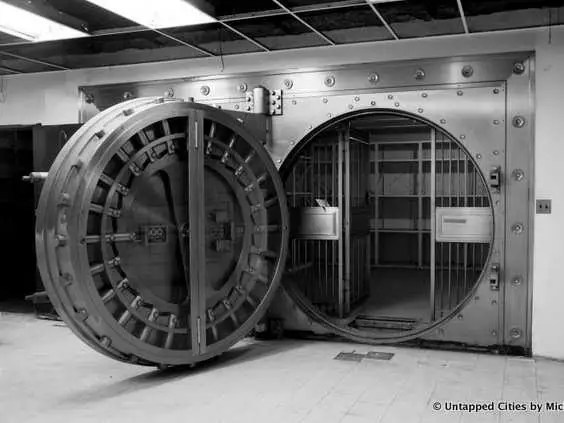
This is a no-brainer for the prospector, et voila! Avaria has a bank, and the prospector has become a banker. And since he loves spices so much, he names it Peppercorn Bank.

Each time a person brings some gold coins to store, he carefully counts them out and makes two copies of a piece of paper. He gives one to the depositor and keeps the other in the safe with the person’s pile of coins. The papers say how many total gold coins that person stored in Peppercorn Bank. And each time they visit him to put more money in the bank (or take some out), they just need to bring the most recent paper so he can update it. In this way, both the customer and the banker know exactly how many gold coins are supposed to be in that customer’s pile, and they could ask to go in and see them any time.

What a relief. The townspeople have a solution to their worries about break-ins because, even if the burglar strikes again and steals someone’s deposit paper, it’s worthless–the burglar can’t show up to Peppercorn Bank and expect the banker to give him that person’s gold coins!

Then one day, the banker has an idea. It would be much faster for him to simply work with the town printer and make a bunch of little pieces of paper that each state, “The bearer of this paper is entitled to 1 gold coin at Peppercorn Bank.” And it would also be convenient for the townspeople because then they wouldn’t have to carry around bags of gold every time they wanted to buy something. They could instead use these pieces of paper for their transactions. The downside of switching over to this system is that those pieces of paper are steal-able, but at least a little stack of papers would be easier to hide in a house than a chest of coins, and the added convenience probably outweighs that downside.

The banker also thinks that if a lot of people start using those papers for transactions, more people will want to do the same because of how convenient they are, so more people will end up converting their gold coins to paper by storing their money in Peppercorn Bank too, which will allow the banker to earn even more money off of storage fees!

What should he call these pieces of paper? Initially, he decides to call them gold coin receipts, but that’s too long and awkward to say, so eventually he shortens it to Goldnotes.

After printing all the Goldnotes he needs, the banker visits every depositor, shares with them his new Goldnotes idea, and trades them for their deposit papers, making sure to give each depositor the appropriate number of Goldnotes to represent the number of gold coins they have already saved in his bank.

And from that point on, he always gives Goldnotes in exchange for gold coins stored in his bank. He cautions everyone not to lose any Goldnotes because there will be no way to prove that the Goldnote was stolen. But he does say that if a Goldnote is getting old and worn, they can bring it to him and he’ll exchange it for a nice fresh one.

Pretty soon, the townspeople are making exchanges both with gold coins and Goldnotes, but more and more they are transacting with Goldnotes due to the additional convenience of them being so much lighter and less bulky. But, any time they want some gold coins for any reason, they simply present the Goldnotes to the banker and he exchanges them for gold coins.

Well, there you have it. We have finally made the transition to a new kind of money! We started with bartering, which then evolved to commodity money–landing on precious metals as the most convenient kind of commodity money–and now we have receipt money.

Is it ok that these Goldnotes are, themselves, nearly worthless?

Yes, because 100% of these Goldnotes are always able to be traded for gold coins immediately, so you can consider them to be fully interchangeable with gold coins, only they are more convenient.

Here’s the principle: Receipt money is equivalent to commodity money as long as 100% of the receipt money is backed by the commodity and the receipt money is always immediately exchangeable for the commodity itself.

In Part 9, I’ll explain a few additional principles related to all of this. And then, the post after that, I’ll talk about what the banker decides to do when he sees all that gold just “sitting there doing nothing” in his vault. (Dun dun duuuuun.)

The Theory of Money, Part 7

Photo by Keenan Constance on Pexels.com

In Part 6, I talked about how storing wealth is always risky because any asset used to store it is susceptible to shifts in value, so you could lose some of your wealth simply by the asset losing value. This is the risk of storing wealth, but it’s a risk worth taking in order to have some wealth saved away in case of an emergency.

Today I’m going to cover two more foundational ideas before I start building more on that foundation I’ve laid: (1) the cost of a lifestyle and (2) how to be immune to inflation.

The Cost of a Lifestyle

Let’s think about how many hours someone has to work to sustain their lifestyle.

Way back in the hunter-gatherer societies, people’s needs were pretty basic. Food, water, clothing, and shelter comprised the majority of their financially costly needs. There was no innovation to significantly augment the number of WUs per hour someone could generate, so when they went to work hunting and gathering and finding shelter, they were probably earning about 1 WU per hour. But because their needs were so simple, their total weekly cost to sustain their lifestyle was probably only around 50 WUs. So, they worked for about 50 hours, and the rest of their time was free to sleep and attend to social duties and recreate. They wouldn’t ever really work much extra like we do these days because they had no easy way to store additional wealth that they might have generated with that extra work. Storing too much extra food was pointless because saving it for too long would just make it go bad. And they didn’t accumulate many belongings because those were too difficult to carry around with their nomadic lifestyle. So they worked each week for what they needed and that was it.

Compare that to today. Our modern lifestyles cost way more than 50 WUs per week. Fortunately, innovation has enabled us to generate way more WUs/hour as well, so even those living below the poverty line can afford a lifestyle that is way more lavish than almost everyone who lived even a couple hundred years ago. But still, how much of it is necessary? Do we need to eat so much and spend so much on travel and entertainment and things? I tire of this rat race of working so hard to just barely be able to afford a modern lifestyle.

Another difference, when comparing to our ancient counterparts, is that we have the ability to work extra to store some wealth in case of a time of need. This is all thanks to the invention of money. But so many of us spend so much and work so much that there’s no leftover wealth to save or invest and no leftover time to work to generate more wealth either.

I used to work at a hospital where I would average four 12-hour shifts per week. How many of those 48 hours were generating WUs that simply went to sustaining my lifestyle that week. Maybe I could become more frugal and only need to work three 12-hour shifts per week, and it would be enough to sustain my lifestyle and also invest for retirement. Then I could spend more time doing things that are more important to me, like spending time with my kids. How many shifts/week would facilitate the greatest happiness and fulfillment?

How to Be Immune to Inflation

All right, so those were my thoughts on the number of WUs it takes to sustain a lifestyle and how it has changed over time (plus some philosophical musings), and those ideas will come up again in subsequent posts in this series. Now let’s talk about becoming “inflation proof.”

Remember in Part 6 when I talked about the blacksmith starting to counterfeit gold coins? The effect of that was that the number of WUs stored in the form of gold coins stayed the same, but the total number of gold coins had increased, so each gold coin represented fewer WUs. Yes, I’ve said this same thing in a few different ways now, and that’s because it’s important. Another way I’ve said it is that the WUs got “diluted” over a larger total number of gold coins. I’ve also given a ratio to calculate how many WUs each gold coin is worth:

aggregate-number-of-WUs-attempting-to-be-saved-as-cash:aggregate number-of-gold-coins

Understanding this principle is a prerequisite to understanding inflation, which I’ve also already defined. The important thing to remember is that we perceive inflation by seeing diffusely higher prices, but what’s really happening is the number of WUs represented by a unit of money is decreasing, which means the money price of everything has to increase to still reimburse the seller the appropriate number of Wealth Units.

There are lots of different factors that cause inflation in modern monetary systems, and I haven’t talked about most of them yet, but they all act in the same way: They alter the WU:money ratio. And printing more money is one way to do that.

As a sidenote, I think this is a good place to mention that when a society uses money that has intrinsic worth (i.e., commodity money like gold or corn), it prevents the government from causing inflation (i.e., taking some of your wealth without your consent) by creating more money out of nothing because nobody has the ability to create gold or corn out of nothing!

Now, on to explaining how to become immune to inflation.

In this series, I’ve been distinguishing stored wealth as cash-wealth and non-cash-wealth for a reason. Cash wealth–if it’s the kind of cash that does not have intrinsic value–is susceptible to the government making more of it and thereby taking some of your WUs through inflation. On the other hand, non-cash wealth, such as a house or ownership in a business, doesn’t lose any value when inflation happens, which should become clear with the following example.

Let’s say the farmer has 100 WUs worth of grain that he’s stored to sell next year because he’s going to grow a different crop next year. Then, the blacksmith counterfeits a bunch of gold coins and causes 10% inflation in the intervening months. Has the farmer lost any WUs worth of grain? Nope. He still has the same amount of grain, and grain’s wealth price has not changed. So, when he finally goes to sell his grain, he’ll figure out the WU:gold coin ratio and price the grain accordingly. Maybe he would have sold the lot of it for 10 gold coins last season, but this season he will sell the lot of it for 11 gold coins instead. Either way, he is getting paid 100 WUs. This assumes that the price of grain has not changed. For example, if some other farmer had pests eat the majority of his wheat crop, maybe grain has become in short supply, which would allow our farmer to sell it for more than 100 WUs. But, assuming no market changes have altered the wealth price of wheat, he would still sell the lot of it for 100 WUs, just the money price required to get those 100 WUs would have changed.

My point is this: In monetary systems where new money can be printed, cash is susceptible to inflation, but non-cash assets are not susceptible to inflation because their prices simply change to reflect the new WU:money ratio.

So, you want to be “inflation proof”? Store your wealth in non-cash assets and you’ll be fine. Although, be careful which non-cash assets you choose–most are susceptible to depreciation (like a car). The best would be to store your wealth in non-cash assets that appreciate over time (like most investments do, which we discussed in Part 3).

This is the last of the foundation I needed to build to finally start evolving Avaria’s money toward modern money. It all starts with the invention of banks in Part 8, which changes everything.